Clear audio is often taken for granted until it fails. In healthcare, education, and professional communication, poor speech intelligibility can slow workflows, cause repetition, and increase listener fatigue. One of the most common causes of degraded audio quality is air movement interacting with a microphone.
Microphone windscreens address this problem directly.
Even mild airflow from breathing, ventilation systems, or outdoor conditions can introduce low-frequency noise that masks speech. A 2025 peer-reviewed study published in PubMed Central by the U.S. The National Library of Medicine (NIH) found that microphones using windscreens reduced wind-induced noise and improved usable signal levels by up to approximately 4 decibels, enough to make a meaningful difference in speech clarity.
In practical terms, small improvements in signal-to-noise ratio can determine whether speech is clearly understood or compromised by rumble and distortion. This is especially critical in environments where communication must be accurate the first time.
This guide explains why microphone windscreens matter, how they improve sound quality, and when they are essential for clear, reliable communication.
Key Takeaways
Microphone windscreens are essential for speech clarity, not just optional accessories. They reduce noise caused by wind, breath, and airflow that microphones cannot distinguish from sound.
Even mild airflow can significantly degrade audio quality. A 2025 NIH-published study found windscreens can improve usable signal levels by up to approximately 4 dB, a meaningful difference for speech intelligibility.
Windscreens improve sound by removing unwanted noise, not by changing the voice. When properly matched, they preserve natural speech while reducing rumble, pops, and breath noise.
Different environments require different windscreen types. Foam windscreens suit most indoor and clinical uses, while higher-density or furry windscreens are needed for moderate to heavy airflow and outdoor conditions.
Speech-focused and shared-use environments benefit the most. Healthcare, education, broadcast, and training settings rely on windscreens to ensure speech is understood the first time.
Hygiene and equipment protection are key benefits. Windscreens act as a removable barrier that helps protect microphone elements from moisture, debris, and wear, especially in shared-use setups.
Choosing the right windscreen depends on use, not trends. Matching airflow level, microphone placement, and usage frequency is more important than selecting the most aggressive option.
Proper windscreen selection supports long-term reliability. When sized, maintained, and matched correctly, windscreens improve consistency, extend microphone lifespan, and reduce downstream audio issues.
What Is a Microphone Windscreen?
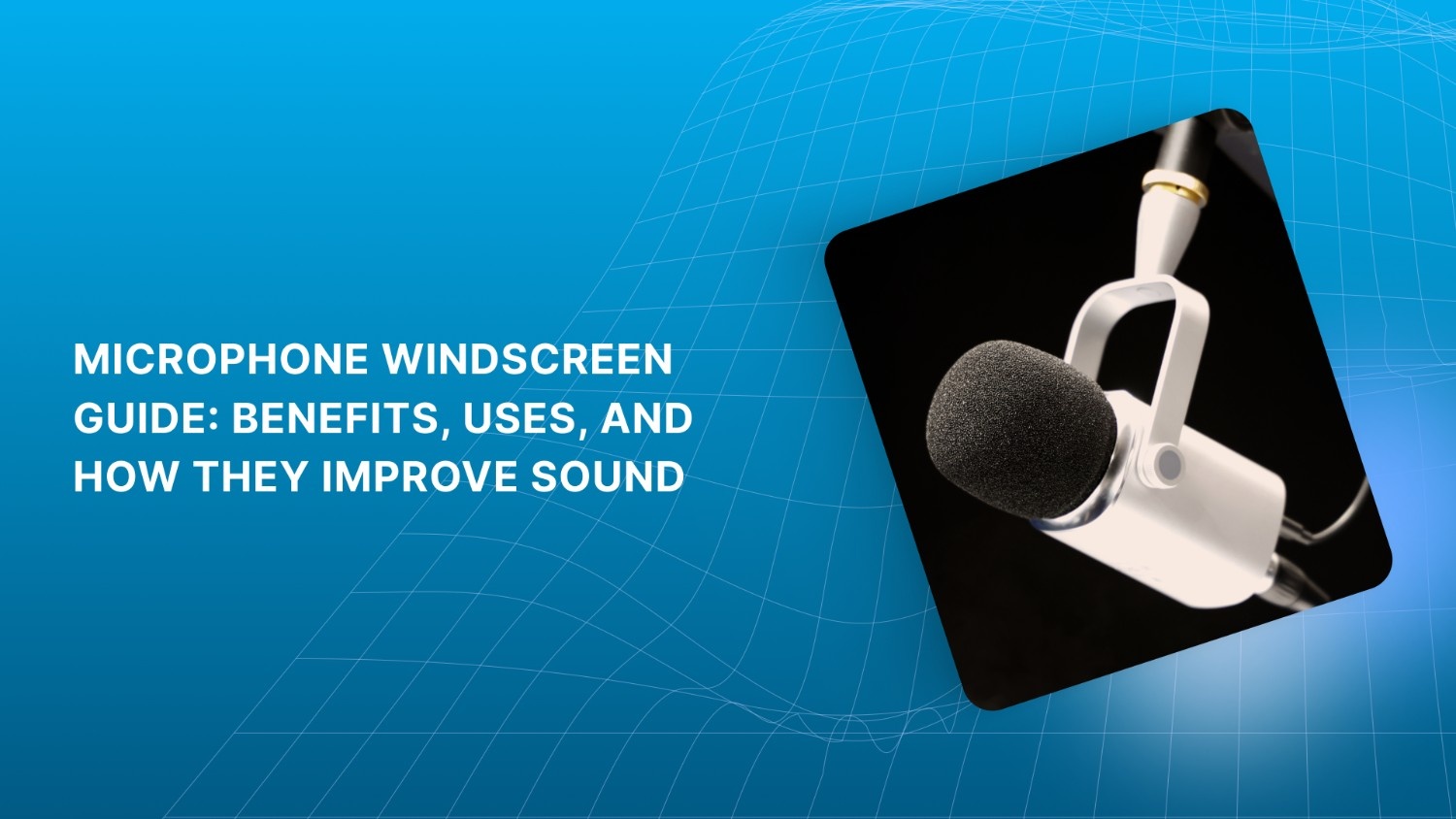
A microphone windscreen is a protective cover that fits directly over a microphone to reduce unwanted noise caused by air movement before sound reaches the microphone diaphragm.
Microphones are designed to capture sound waves, but they are also sensitive to pressure changes from wind, breathing, and sudden airflow. These air disturbances are not meaningful sound, yet they register as noise, reducing clarity and intelligibility.
What a Windscreen Does
A windscreen improves audio by managing airflow before it reaches the microphone capsule. Specifically, it:
Slows and diffuses fast-moving air
Reduces low-frequency wind rumble
Minimizes breath noise and plosive pops
Helps preserve consistent speech clarity
How It Works
Windscreens are made from acoustically transparent materials such as open-cell foam or layered fibers. These materials allow speech to pass through while dispersing air pressure across a larger surface area, preventing direct impact on the microphone element.
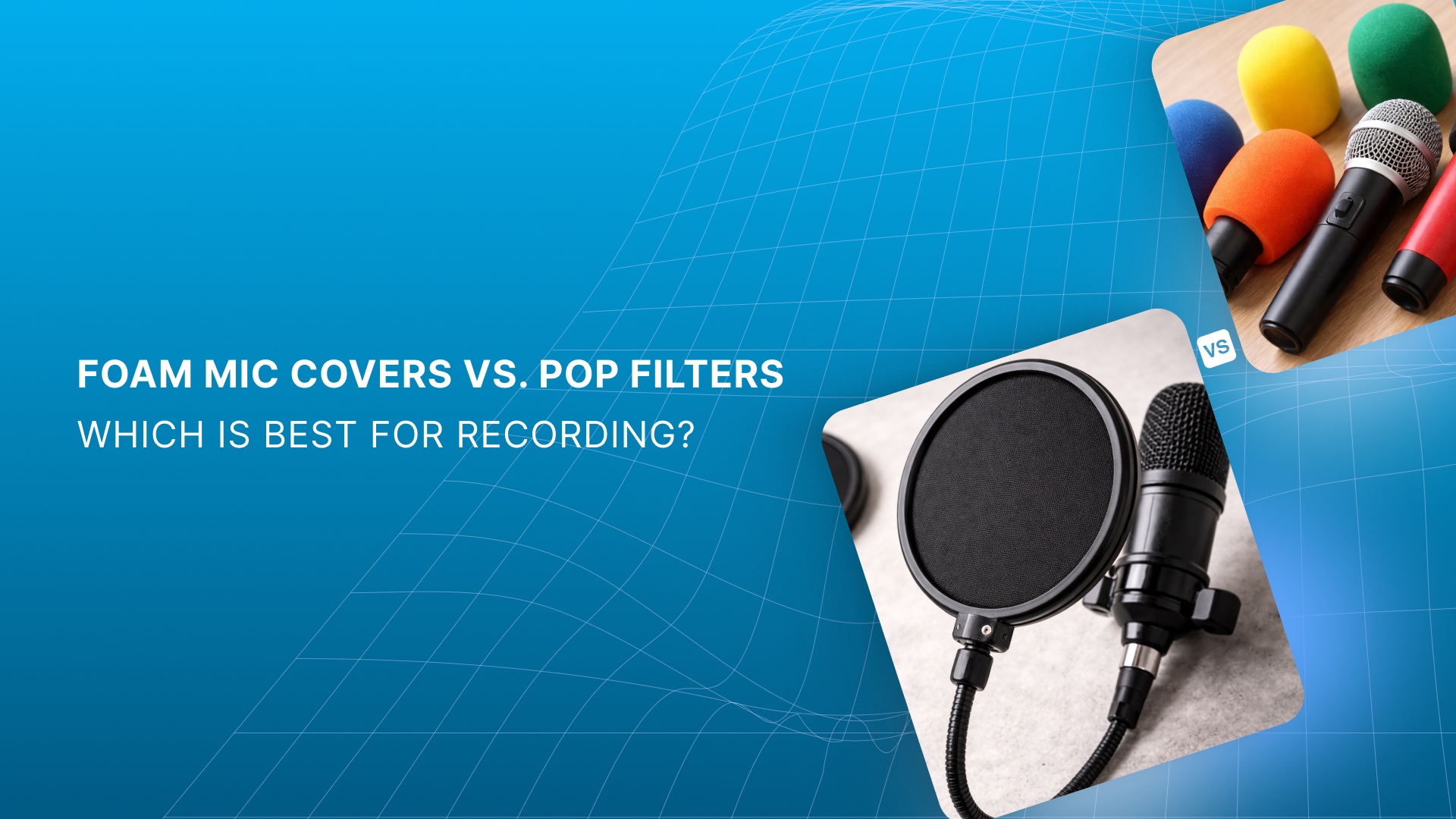
Windscreen vs. Pop Filter
Windscreens are often confused with pop filters, but they serve different roles:
Windscreen: Fits on the microphone and protects against wind, breath noise, and general airflow
Pop filter: Sits in front of a stationary microphone and mainly reduces plosive sounds from close speech
In professional and shared-use environments, windscreens also:
Protect microphone elements from moisture and debris
Support more consistent performance over time
Contribute to better hygiene in shared microphone setups
Understanding what a microphone windscreen does is the first step toward choosing the right one for your environment and communication needs.
If you are already evaluating options, exploring the full range of microphone windscreens by application can help narrow down the right fit based on microphone type and environment.
Why Microphone Windscreens Matter More Than You Think
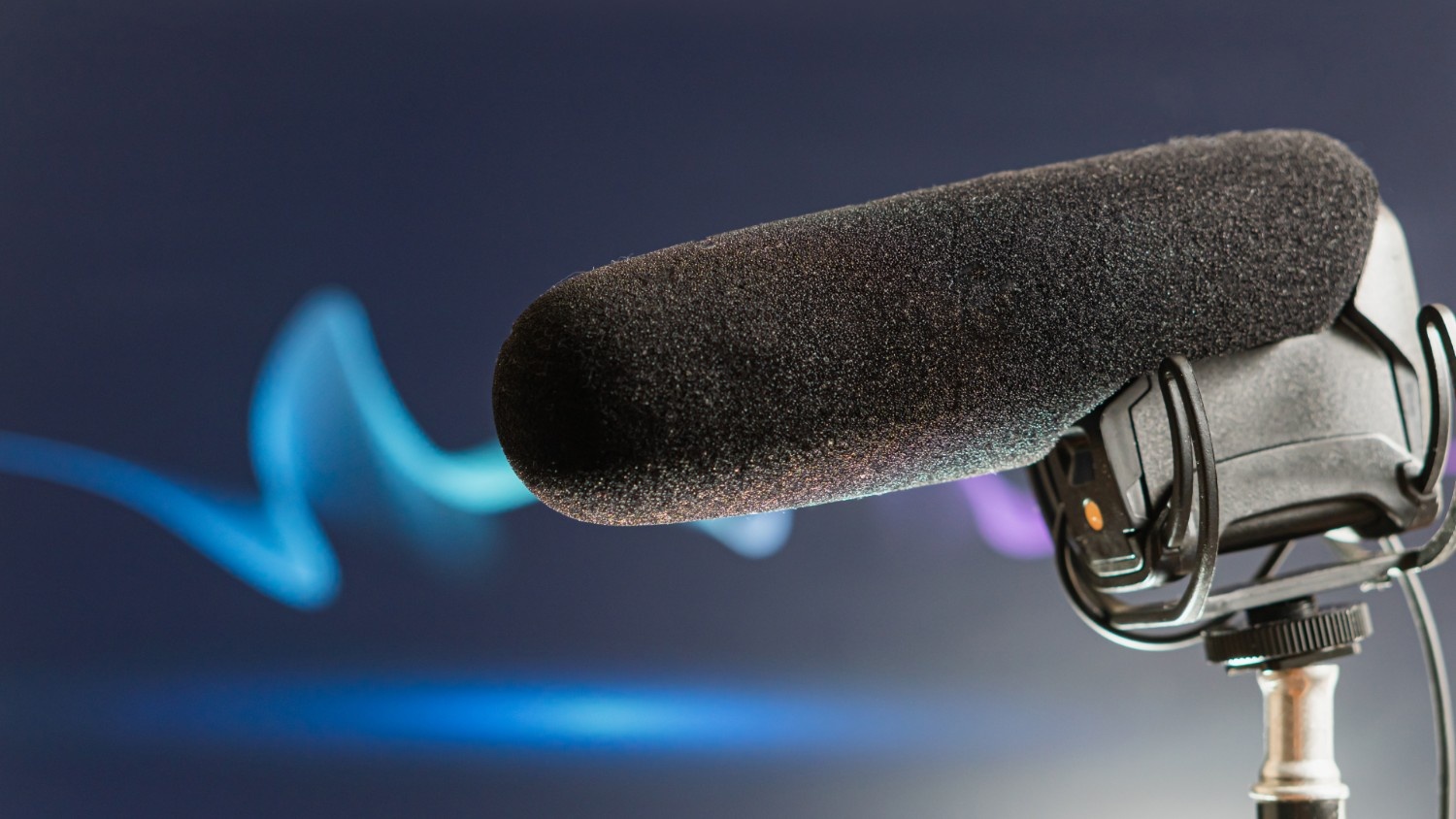
Microphone windscreens are often treated as optional accessories, but in practice they play a critical role in whether speech is usable, intelligible, and comfortable to listen to. The reason is simple: microphones cannot tell the difference between sound and moving air.
The Real Problem: Air, Not Volume
Many audio issues blamed on “bad microphones” are actually caused by uncontrolled airflow. Common sources include:
Breathing during close speech
Plosive consonants like P, B, and T
HVAC systems and room ventilation
Subtle indoor drafts or outdoor wind
Even when airflow is not obvious to the speaker, it can overwhelm the microphone diaphragm and create low-frequency noise that masks speech.
Why This Matters for Speech
Uncontrolled air movement leads to problems that cannot be fully corrected later:
Wind rumble competes directly with the speech frequency range
Distortion caused by air pressure cannot be cleanly removed in post-processing
Listeners experience reduced clarity and increased fatigue
For speech-focused environments, clarity is more important than loudness. Windscreens help ensure the microphone captures what is said, not the air around it.
Why “Fixing It Later” Often Fails
Noise reduction software works best on steady, predictable noise. Wind and breath noise are irregular and dynamic, which means:
Automated filters remove parts of the voice along with the noise
Speech intelligibility suffers even if volume levels look correct
Recordings may still sound muddy or unstable
Using a windscreen addresses the problem at the source, before the microphone signal is compromised.
Why Professional Environments Rely on Windscreens
In clinical, educational, broadcast, and shared-use settings:
Speech often must be understood the first time
Re-recording is not always possible
Consistency across users matters
In these situations, windscreens are not optional. They are a simple, physical control that protects speech quality and ensures reliable communication.
This is why microphone windscreens matter more than many people expect, especially when speech clarity is the priority. Fixed microphones used at lecterns or desks face a different set of airflow issues, often caused by HVAC systems and speaking distance. For these setups, podium and desktop microphone windscreens are designed to manage airflow without interfering with speech pickup.
Core Benefits of Using a Microphone Windscreen

Microphone windscreens deliver several distinct benefits, all of which directly support clear, intelligible speech. Each benefit addresses a specific problem caused by uncontrolled airflow.
1. Reduction of Wind Noise
The most obvious benefit is the reduction of wind-related noise.
Slows down fast-moving air before it hits the microphone
Reduces low-frequency rumble caused by drafts or outdoor wind
Prevents sudden bursts of noise from overpowering speech
This is critical not only outdoors, but also indoors where ventilation systems or room airflow can affect recordings.
2. Control of Breath Noise and Plosives
Breath noise and plosive sounds occur during normal speech, especially when speaking close to a microphone.
Softens harsh pops from letters like P, B, and T
Reduces noise caused by exhalation during speech
Helps maintain consistent audio levels across different speakers
This benefit is especially important in clinical, training, and broadcast environments where microphones are used at close range.
3. Improved Speech Clarity and Listener Comfort
By reducing unwanted air noise, windscreens allow speech to stand out more clearly.
Improves signal-to-noise ratio for spoken words
Makes speech easier to understand without increasing volume
Reduces listener fatigue during longer sessions
Clearer speech benefits both the speaker and the listener, particularly in instructional or informational settings.
4. Protection of the Microphone Capsule
Beyond sound quality, windscreens provide physical protection.
Shields the microphone from moisture and saliva
Reduces exposure to dust and debris
Helps maintain consistent microphone performance over time
In shared or professional environments, this protection supports both equipment longevity and hygiene.
Each of these benefits works together to improve reliability and clarity. Rather than enhancing sound artificially, a windscreen helps ensure the microphone captures clean, usable speech under real-world conditions.
Recommended Read: Benefits of Disposable Headphone & Headset Covers
How Windscreens Improve Sound Quality Without Changing Your Voice
A common concern is that adding a windscreen will change how a voice sounds. In speech-focused applications, the opposite is usually true. Windscreens are designed to remove unwanted noise, not alter the speaker’s voice.
What Windscreens Actually Affect
Windscreens target air movement, not speech content. Specifically, they reduce:
Low-frequency rumble caused by wind or breath
Sudden pressure spikes from plosive consonants
Irregular noise that competes with spoken words
These elements sit outside the core speech information that listeners rely on for understanding.
What They Do Not Change
When properly matched to the microphone, a windscreen does not:
Alter vocal pitch or tone in a meaningful way
Muffle normal speech frequencies
Reduce articulation or clarity
Any slight softening of harsh sounds is usually beneficial for spoken communication, especially in instructional or clinical settings.
Why Speech Sounds Clearer
By removing competing noise before it reaches the microphone capsule, windscreens:
Improve the usable signal-to-noise ratio
Allow speech to sit naturally in the foreground
Reduce the need for aggressive processing or filtering later
The result is audio that sounds more stable, natural, and easier to understand.
Why This Matters for Professional Use
In environments where speech must be clear on the first pass, such as healthcare, training, and broadcast communication, consistency matters more than coloration. Windscreens support that consistency by helping microphones capture only what the speaker intends to communicate.
This is how windscreens improve sound quality, not by changing the voice, but by removing what does not belong in the recording.
Suggested Read: MRI Headphones: Your Guide to a Quieter Scan
Types of Microphone Windscreens and When to Use Them
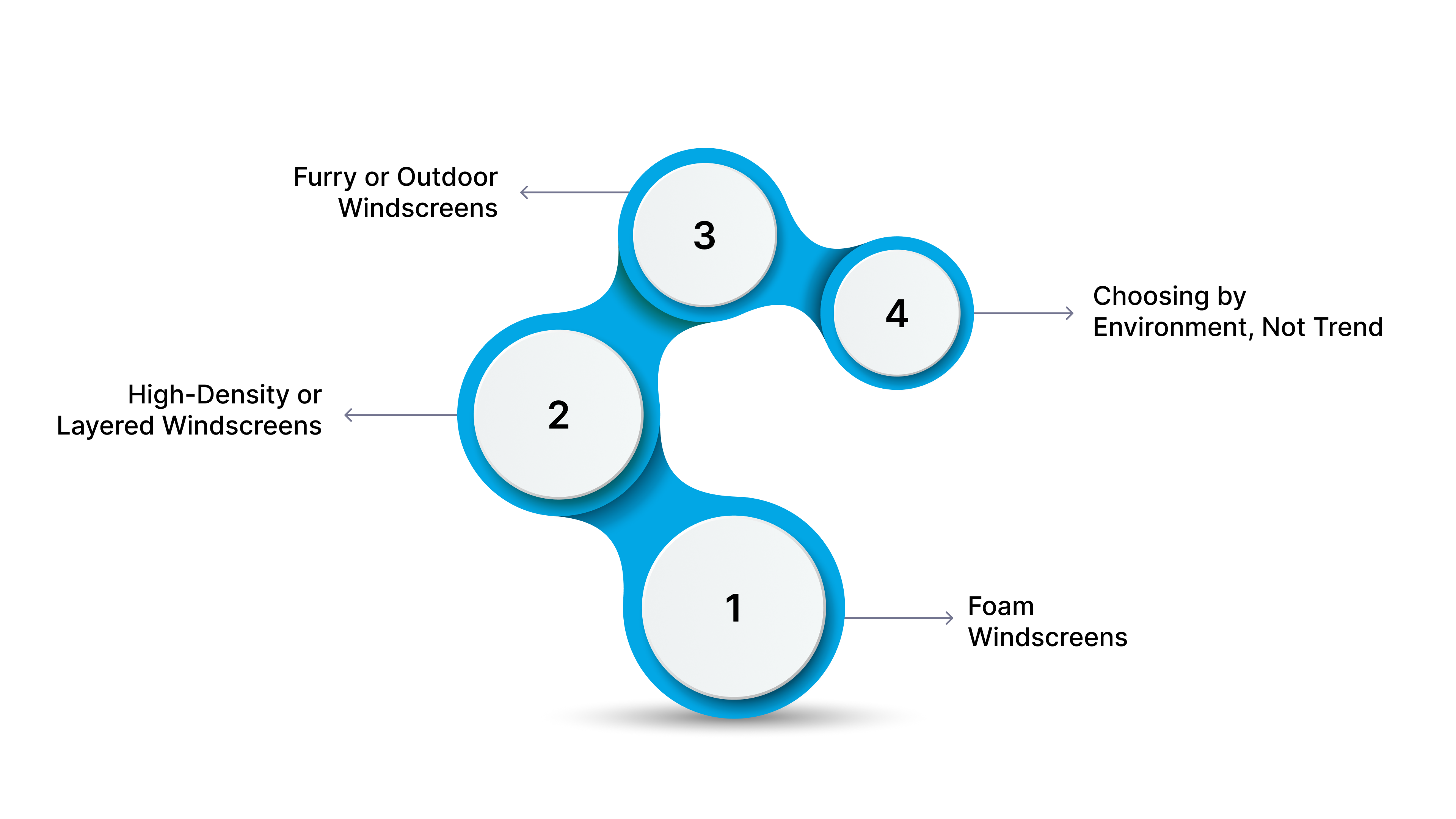
Not all microphone windscreens are the same. Different designs solve different airflow problems, and choosing the right type depends on where and how the microphone is used, especially for speech-focused applications.
Foam Windscreens
Foam windscreens are the most common and widely used option.
Best for:
Indoor speech and voice communication
Close-range microphones
Clinical, educational, and broadcast environments
Why they work:
Open-cell foam slows breath and light airflow
Reduces plosives and indoor air disturbance
Minimal impact on speech clarity when properly sized
Limitations:
Less effective in strong or gusty outdoor wind
Requires cleaning or replacement in shared-use settings
High-Density or Layered Windscreens
Some windscreens use denser foam or layered materials for added control.
Best for:
Areas with moderate airflow
Fixed microphones near ventilation systems
Environments requiring extra protection without bulky covers
Why they work:
Provide greater airflow diffusion than basic foam
Maintain speech intelligibility while improving noise control
Limitations:
Must be correctly matched to the microphone to avoid over-damping
Furry or Outdoor Windscreens
Often referred to as “deadcat” windscreens, these are designed for heavy wind exposure.
Best for:
Outdoor speech and interviews
Field recording and mobile communication
Situations with unpredictable airflow
Why they work:
Long fibers break up turbulent wind before it reaches the mic
Highly effective against strong, irregular gusts
Limitations:
Bulkier than foam windscreens
Typically unnecessary for indoor or clinical use
Choosing by Environment, Not Trend
For speech clarity, the goal is not maximum wind protection, but appropriate protection. Overbuilt windscreens can be unnecessary indoors, while under-protecting a microphone outdoors leads to unusable audio.
Selecting the right windscreen means matching:
The level of airflow
The distance between speaker and microphone
The importance of hygiene and shared use
Understanding these differences helps ensure you use a windscreen that improves communication rather than complicating it.
Understanding windscreen types is only useful if the size and design match the microphone being used. For organizations working with multiple microphone styles, reviewing all microphone windscreen options makes it easier to compare designs across podium, headset, shotgun, and specialty microphones.
Choosing the Right Windscreen for Your Environment
Choosing the right microphone windscreen is less about the microphone model and more about how and where the microphone is used. Speech-focused environments place different demands on airflow control, clarity, and hygiene.
Broadcast and Spoken-Word Recording
For studios, announcer booths, and voice-forward recording spaces:
Foam windscreens are usually sufficient
Focus is on controlling breath noise and plosives
Proper sizing prevents muffling while maintaining clarity
Key priority: Speech intelligibility without altering vocal tone
Healthcare and Clinical Communication
In hospitals, imaging centers, and clinical settings:
Windscreens help manage close-range speech and breath noise
Protection against moisture supports equipment longevity
Hygiene and cleanability are critical for shared use
Key priority: Clear instructions and consistent audio in sensitive environments
Education and Training Rooms
For classrooms, simulation labs, and training facilities:
Foam or higher-density windscreens help manage varied speakers
Reduces distractions from pops and airflow
Supports long listening sessions with reduced fatigue
Key priority: Consistent clarity across different voices and speaking styles
Shared Microphone or Headset Use
In any environment where microphones are shared:
Windscreens act as a first layer of protection
Easier to clean or replace than microphone elements
Help maintain performance across users
Key priority: Reliability, hygiene, and ease of maintenance
Match the Windscreen to the Risk
Rather than choosing the most aggressive option, match the windscreen to:
Airflow strength in the environment
Distance between speaker and microphone
Frequency of shared use
The right windscreen is the one that solves the specific airflow problem without adding unnecessary bulk or complexity. This approach ensures clear, dependable speech in real-world conditions.
Directional microphones used in broadcast and field applications require wind protection that preserves directionality. In these scenarios, shotgun microphone windscreens are designed specifically to reduce wind turbulence without compromising pickup pattern performance.
Hygiene, Maintenance, and Shared-Use Considerations
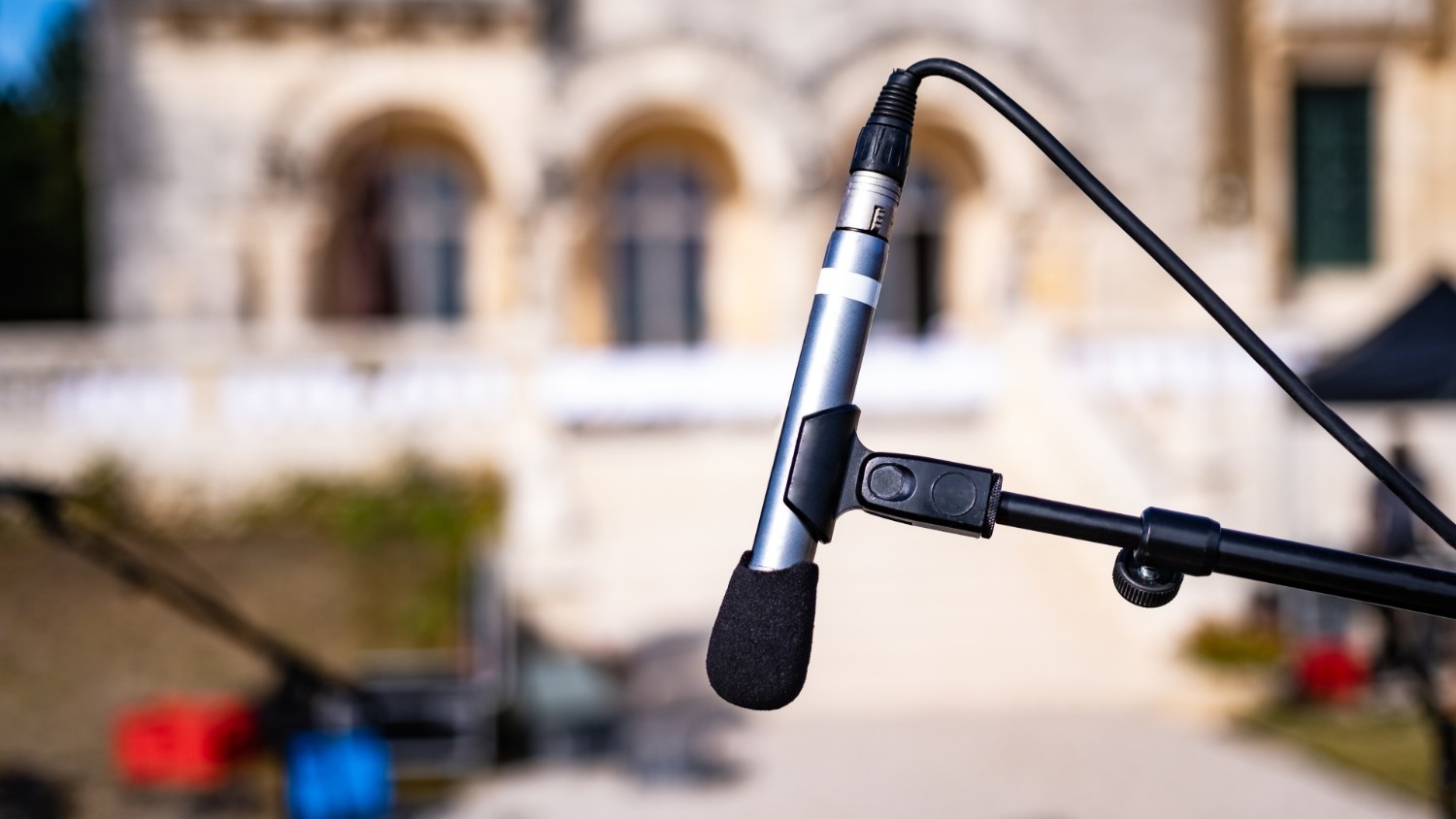
In shared or professional environments, microphone windscreens serve an important role beyond sound quality. They are often the first line of defense for hygiene and equipment protection, especially when multiple users rely on the same microphone.
Why Windscreens Matter for Hygiene
When people speak, breath moisture and saliva naturally travel toward the microphone. Without a windscreen:
Moisture can reach the microphone capsule
Debris can accumulate inside the mic housing
Cleaning the microphone itself becomes more difficult and risky
A windscreen creates a removable barrier that helps contain these issues before they reach sensitive components.
Best Practices for Shared-Use Environments
In healthcare, education, training, and other shared settings:
Windscreens should be cleaned or replaced regularly
Disposable or easily washable options reduce cross-use concerns
Keeping spare windscreens on hand supports quick changeovers
This approach protects both users and equipment without interrupting workflows.
Cleaning and Maintenance Considerations
Proper maintenance depends on the windscreen material:
Foam windscreens: Can often be gently washed and fully dried before reuse
Higher-density or specialty windscreens: May require manufacturer-recommended cleaning methods
Disposable windscreens: Designed for single-user or short-term use
Allowing windscreens to dry completely is essential to prevent moisture-related damage or odor buildup.
Protecting Long-Term Performance
Replacing a worn windscreen is far more cost-effective than repairing or replacing a microphone. In professional environments, consistent maintenance:
Extends microphone lifespan
Preserves audio consistency over time
Supports compliance with internal hygiene standards
For shared-use applications, windscreens are not just accessories. They are a practical tool that supports cleanliness, reliability, and long-term audio performance.
How Scan Sound Approaches Microphone Windscreens

At Scan Sound, Inc., microphone windscreens are not treated as accessories or afterthoughts. They are considered an integral part of a complete speech communication system, especially in environments where clarity, reliability, and hygiene matter every day.
Designed Around Speech, Not Studio Trends
Scan Sound’s approach starts with a simple priority: speech intelligibility.
Windscreens are selected and engineered to manage airflow without masking speech
Emphasis is placed on spoken communication, not music coloration
Solutions are designed to work consistently across different voices and speaking styles
This focus supports environments where instructions, dialogue, and verbal cues must be understood clearly the first time.
Built for Professional and Clinical Environments
Many Scan Sound applications involve:
Close-range microphones
Shared headsets or microphones
Long daily usage cycles
In these settings, windscreens are chosen to support:
Breath and plosive control for close speech
Protection of sensitive microphone elements
Durability under repeated cleaning or replacement cycles
Hygiene and System Longevity
Rather than relying on frequent microphone replacement, Scan Sound systems use windscreens as a practical, replaceable layer that:
Helps limit moisture and debris exposure
Supports shared-use hygiene practices
Protects long-term microphone performance
This approach aligns with institutional purchasing priorities, where reliability and maintenance matter as much as audio quality.
A System-Level Perspective
Scan Sound does not treat windscreens as standalone items. They are considered part of a broader system that includes:
Microphone type and placement
User distance and speaking behavior
Environment-specific airflow challenges
By addressing windscreens at the system level, Scan Sound helps ensure that audio solutions perform reliably in real-world conditions, not just ideal ones.
This philosophy reflects decades of experience designing speech-focused audio solutions for professional, healthcare, and institutional use. Learn more about Pilot Headset Microphone Windscreens
Conclusion
Microphone windscreens are a small component with a significant impact. By controlling unwanted airflow before it reaches the microphone, they protect speech clarity, reduce listener fatigue, and help ensure communication is understood the first time. In professional, clinical, and shared-use environments, this reliability matters far more than subtle differences in microphone specifications.
Choosing the right windscreen is not about adding more equipment. It is about matching airflow control, hygiene needs, and microphone placement to the realities of how people actually speak and work. When windscreens are properly selected and maintained, they support consistent audio quality while protecting sensitive microphone components over time.
If your organization relies on clear spoken communication, the next step is confirming that your microphones and windscreens are properly matched to your environment. Scan Sound, Inc. provides application-based guidance for healthcare, education, broadcast, and institutional settings. You can request fit confirmation, usage guidance, or system support to ensure your audio setup delivers clear, dependable speech where it matters most.
FAQs
Q: What is the purpose of a microphone windscreen?
A: The purpose of a microphone windscreen is to reduce unwanted noise caused by airflow such as wind, breath, and ventilation. By controlling air movement before it reaches the microphone, windscreens improve speech clarity and reduce rumble, pops, and distortion.
Q: When do you actually need a microphone windscreen?
A: You need a microphone windscreen anytime airflow can reach the microphone. This includes close-range speech, rooms with HVAC airflow, shared microphones, and outdoor environments. In speech-focused settings, windscreens help ensure voices are understood clearly the first time.
Q: Do microphone windscreens improve sound quality?
A: Yes. Windscreens improve sound quality by reducing low-frequency noise that masks speech. They do not enhance or color the voice; instead, they remove unwanted air noise so spoken words remain clear and intelligible.
Q: Will a windscreen change how my voice sounds?
A: When properly matched, a windscreen does not noticeably change vocal tone or clarity. It primarily removes breath noise and airflow artifacts, which often makes speech sound more natural and easier to listen to.
Q: What type of microphone windscreen should I use?
A: The right windscreen depends on the environment. Foam windscreens work well for most indoor speech and clinical use. Higher-density or furry windscreens are better for moderate to heavy airflow, such as outdoor or field applications.