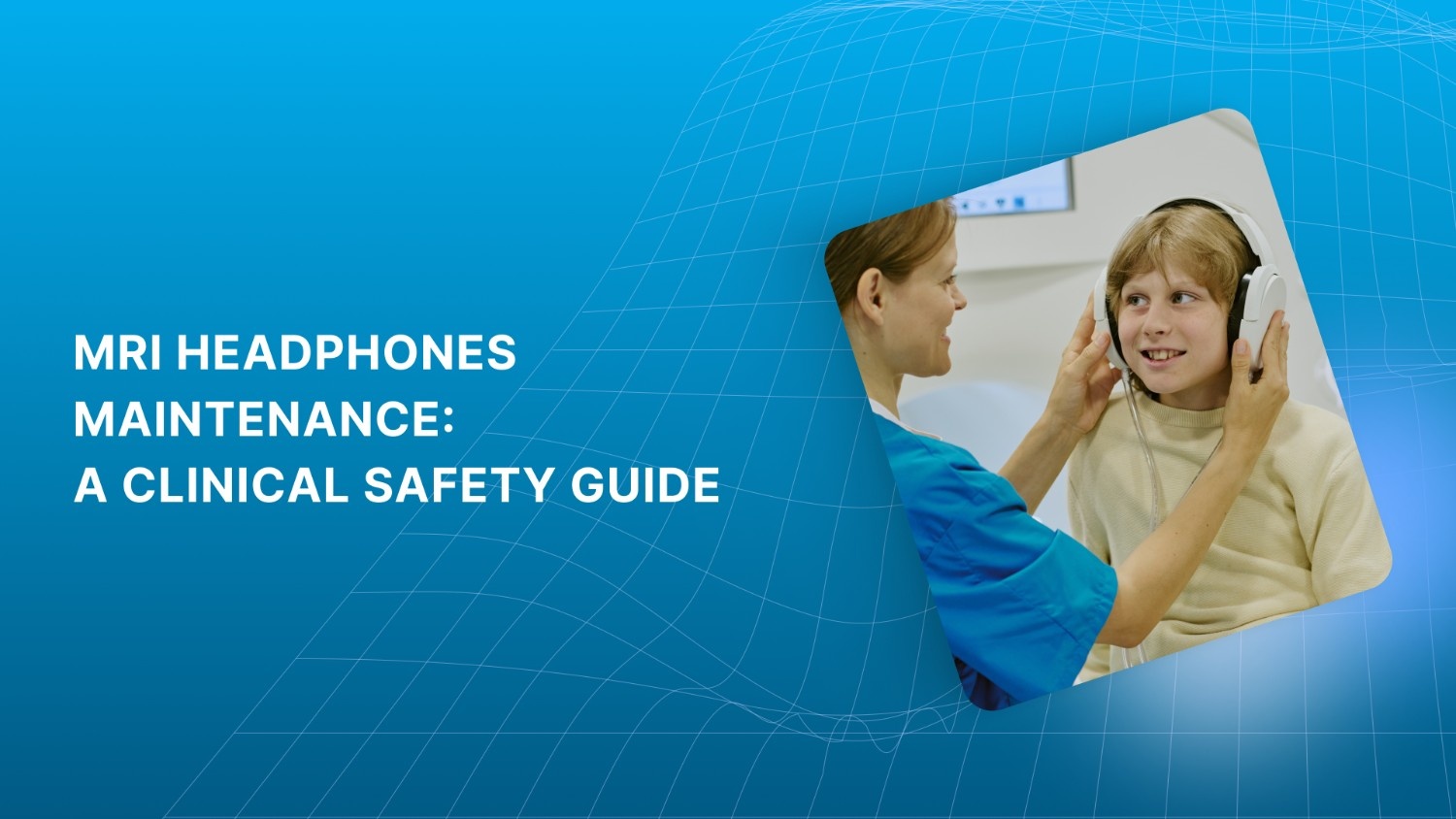
In most imaging departments, MRI headphones are shared equipment. They move from patient to patient, scan to scan, often across long days with little downtime. That reality makes their maintenance more than a comfort issue. It is a matter of patient safety, infection control, and operational reliability.
Unlike consumer headphones, MRI headphones operate in a highly regulated environment. They must function safely near powerful magnetic fields, withstand frequent cleaning, and perform consistently despite repeated handling. When maintenance is overlooked, even small issues such as cracked housings, degraded ear cushions, or stressed cables can create unnecessary risks or interruptions.
From a clinical perspective, poorly maintained headphones can affect:
Patient experience, including discomfort, poor audio clarity, or increased anxiety during scans
Workflow efficiency, including delays caused by equipment failures or last-minute replacements
Safety confidence, including uncertainty about whether accessories remain MRI-safe over time
Importantly, maintenance is not just about extending equipment life. It ensures that every patient entering the scan room is supported by accessories that are clean, intact, and appropriate for shared clinical use.
This guide approaches MRI headphone maintenance from a practical, real-world lens. It recognizes the pressures imaging teams face and focuses on habits and checks that support safe, repeatable use without adding unnecessary complexity to daily workflows.
Key Takeaways
MRI headphones maintenance is a patient safety issue, not just an equipment care task. Shared use, frequent cleaning, and daily handling make regular inspection and upkeep essential in clinical environments.
MRI compatibility is not permanent. Wear such as cable fatigue, housing cracks, or degraded ear cushions can compromise safety over time, even if headphones were originally MRI-safe.
Cleaning and maintenance are not the same. Cleaning supports infection control between patients, while maintenance focuses on long-term safety, performance, and equipment integrity.
Daily cleaning should be consistent and workflow-friendly. Focusing on high-touch areas and allowing proper drying helps reduce cross-contamination without accelerating equipment wear.
Routine inspection prevents downtime and surprises. Quick visual checks for cables, connectors, housings, and ear cushions help catch issues before they disrupt scans.
Storage and handling directly affect headphone lifespan. Avoiding tight cable wrapping, connector strain, and improper storage can significantly reduce premature damage.
Not all wear can be repaired safely. Knowing when to replace or retire MRI headphones helps imaging teams avoid scan delays, safety risks, and emergency purchases.
Maintenance planning supports cost control. Proactive replacement and accessory management are far more predictable and affordable than reactive downtime or rushed replacements.
MRI headphones should be designed for shared clinical use. Products engineered for frequent cleaning, inspection, and long-term durability, such as those from Scan Sound, better support real-world imaging workflows.
The most effective maintenance programs are built into daily protocols. Standardized processes improve consistency, compliance readiness, and staff confidence across MRI departments.
Safety First: Understanding MRI Compatibility Over Time
MRI headphones are designed to be MRI-compatible, but that designation is not permanent. Compatibility depends not only on the original design, but also on the condition of the headphones as they are used day after day in a clinical environment.
In shared MRI settings, headphones experience repeated handling. They are adjusted for different patients, coiled and uncoiled, cleaned frequently, and moved between scan rooms and control areas. Over time, this routine use can introduce wear that is easy to overlook.
Common changes that can affect ongoing MRI safety include:
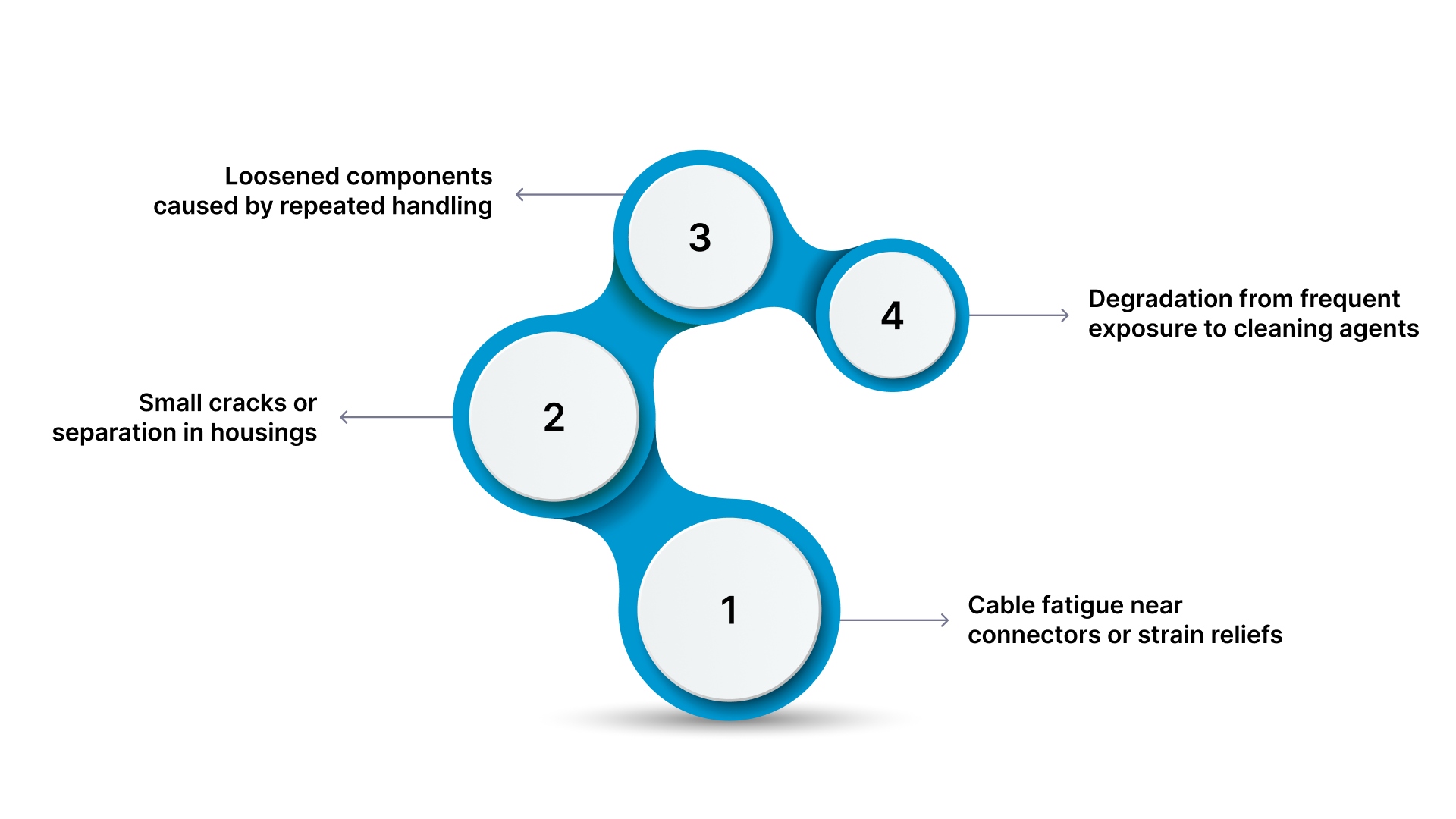
Cable fatigue near connectors or strain reliefs
Small cracks or separation in housings
Loosened components caused by repeated handling
Degradation from frequent exposure to cleaning agents
Individually, these issues may seem minor. Collectively, they can change how an accessory behaves in the MRI environment and reduce confidence that it will perform as expected during a scan.
MRI safety depends on predictability. Accessories should behave the same way every time they are brought into the scan room. Regular maintenance and inspection help imaging teams confirm that headphones remain suitable for use, rather than relying solely on how they were originally labeled or purchased.
Thinking about MRI compatibility as an ongoing condition helps shift maintenance from a reactive task to a preventive one. It supports safer workflows and reduces the likelihood of surprises when patients are already on the table. View Scan Sound’s full range of MRI-safe products and accessories designed for predictable performance in the scan room.
Cleaning vs. Maintenance: What Healthcare Teams Often Conflate
In MRI departments, the terms cleaning and maintenance are often used interchangeably. In practice, they serve different purposes, and confusing the two can leave important gaps in safety and reliability.
Cleaning is primarily about infection control. It focuses on reducing the risk of cross-contamination between patients by addressing surfaces that come into direct contact with skin, hair, or ears. This process typically happens between patients and follows facility-approved hygiene protocols.
Maintenance, on the other hand, is about equipment condition and safety over time. It looks beyond surface cleanliness to assess whether the headphones are still intact, functional, and appropriate for use in the MRI environment.
Key differences include:
Cleaning addresses germs and contaminants
Maintenance addresses wear, damage, and performance
Cleaning is frequent and routine
Maintenance is periodic and preventive
Because cleaning happens so often, it can create a false sense of security. Headphones may appear ready for use because they look clean, even if underlying issues such as cable stress or material fatigue are developing.
Separating these responsibilities helps imaging teams protect both patients and equipment. Cleaning supports infection control goals, while maintenance supports MRI safety, workflow reliability, and long-term usability. Both are necessary, but they are not the same task. Explore MRI headphone accessories designed to support routine cleaning, inspection, and long-term clinical use.
Suggested Read: MRI Headphones: Your Guide to a Quieter Scan
Daily and Between-Patient Cleaning Best Practices
In busy MRI environments, cleaning headphones between patients needs to be thorough but also realistic. The goal is to reduce cross-contamination risk without introducing practices that damage equipment or slow patient flow.
Daily and between-patient cleaning should focus on the areas most likely to come into contact with patients. These high-touch surfaces are where hygiene efforts deliver the greatest benefit.
Common areas to prioritize include:
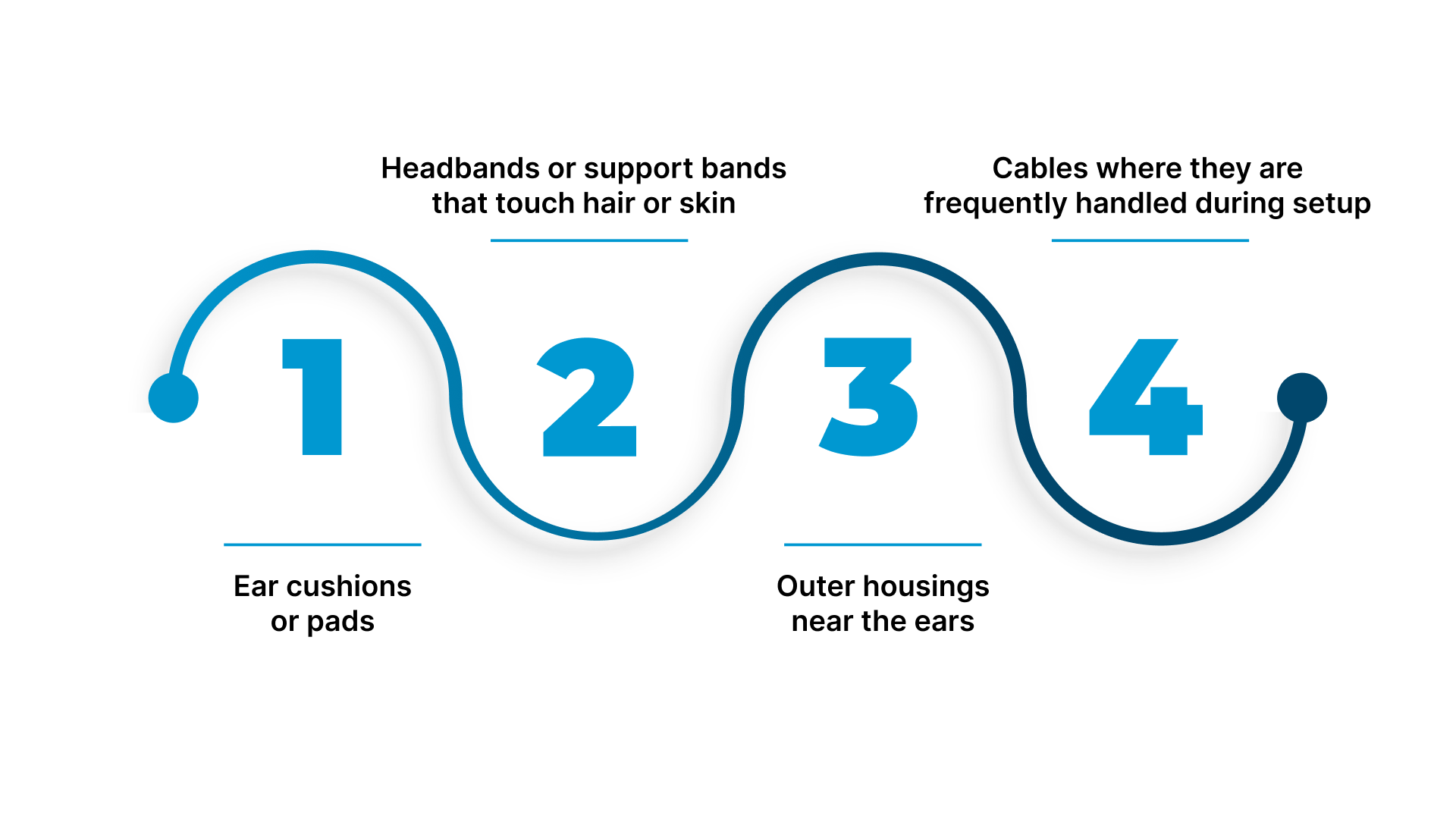
Ear cushions or pads
Headbands or support bands that touch hair or skin
Outer housings near the ears
Cables where they are frequently handled during setup
Cleaning should follow facility-approved infection control protocols and align with MRI safety requirements. Using appropriate methods consistently is more important than using aggressive techniques that may shorten equipment life.
It is also important to allow headphones to dry fully before the next use. Residual moisture can affect materials over time and may contribute to premature wear when combined with repeated cleaning cycles.
By keeping cleaning steps simple, repeatable, and aligned with clinical workflows, imaging teams can support patient safety without turning headphone care into a bottleneck. Consistency, rather than complexity, is what makes daily cleaning effective in shared MRI environments. For worn or frequently cleaned components, view MRI headphone replacement parts designed for shared clinical environments.
Also Read: Which Earpads or Cushions Will Fit on Headsets
Routine Inspection and Preventive Maintenance Checks
Cleaning keeps MRI headphones hygienic, but inspection is what keeps them safe and reliable over time. Routine checks help imaging teams catch small issues before they become workflow disruptions or safety concerns.
Preventive inspections do not need to be complicated or time-consuming. They are most effective when they are simple, visual, and built into existing routines.
During routine checks, staff should look for:
Fraying, kinks, or stiffness in cables
Stress or separation near connectors and strain reliefs
Cracks, chips, or looseness in housings
Ear cushions that are torn, compressed, or no longer seating properly
These checks can often be completed in seconds while setting up or breaking down a scan. The key is consistency. Small changes are easier to address early than after a failure occurs during patient setup.
In addition to daily visual checks, periodic deeper inspections can help confirm that headphones are still appropriate for MRI use. This may involve designated staff or scheduled reviews, depending on department size and volume.
Preventive maintenance supports safer scans, smoother workflows, and fewer unexpected equipment issues. It reinforces the idea that MRI headphone safety is maintained through ongoing attention, not assumed based on past performance.
If routine inspections are revealing cable fatigue or housing wear, explore MRI headphones designed specifically for high-use, shared imaging environments.
Storage and Handling: Preventing Damage Between Uses
How MRI headphones are handled between patients can have a significant impact on their condition over time. Even well-designed equipment can degrade faster when it is dropped, tightly coiled, or stored without a consistent process.
In busy imaging departments, headphones are often set down quickly between scans. Without clear handling habits, this can lead to unnecessary stress on cables, connectors, and housings.
Good storage and handling practices focus on reducing strain and exposure. Helpful habits include:
Avoiding tight or repetitive cable wrapping
Keeping connectors from dangling or bearing weight
Storing headphones where they will not be crushed or pinched
Separating headphones from other equipment that may snag or pull on cables
Environmental factors also matter. Storage areas should be dry, clean, and appropriate for clinical equipment. Excess moisture, cleaning residue, or cluttered surfaces can all contribute to gradual material breakdown.
Consistent handling and storage do not require special equipment or added steps. Small adjustments to where and how headphones are placed between uses can help preserve their integrity, reduce maintenance issues, and support safer, more reliable use in the MRI environment.
Departments experiencing frequent handling-related damage may benefit from MRI headphone designs that reduce cable strain and improve durability between uses.
Recommended Read: Benefits of Disposable Headphone & Headset Covers
How Scan Sound Designs MRI Headphones for Safety and Longevity
MRI environments place unique demands on audio accessories. Headphones must operate safely near powerful magnetic fields, remain comfortable for patients who may already be anxious or uncomfortable, and withstand constant reuse in shared clinical settings. These demands require purpose-built design, not adaptations of consumer or general medical headphones.
Scan Sound has focused on healthcare audio for decades, with a particular emphasis on MRI-safe and MRI-compatible solutions. The company’s approach is rooted in engineering for real-world use, where equipment is cleaned frequently, handled by many staff members, and relied on throughout long imaging days.
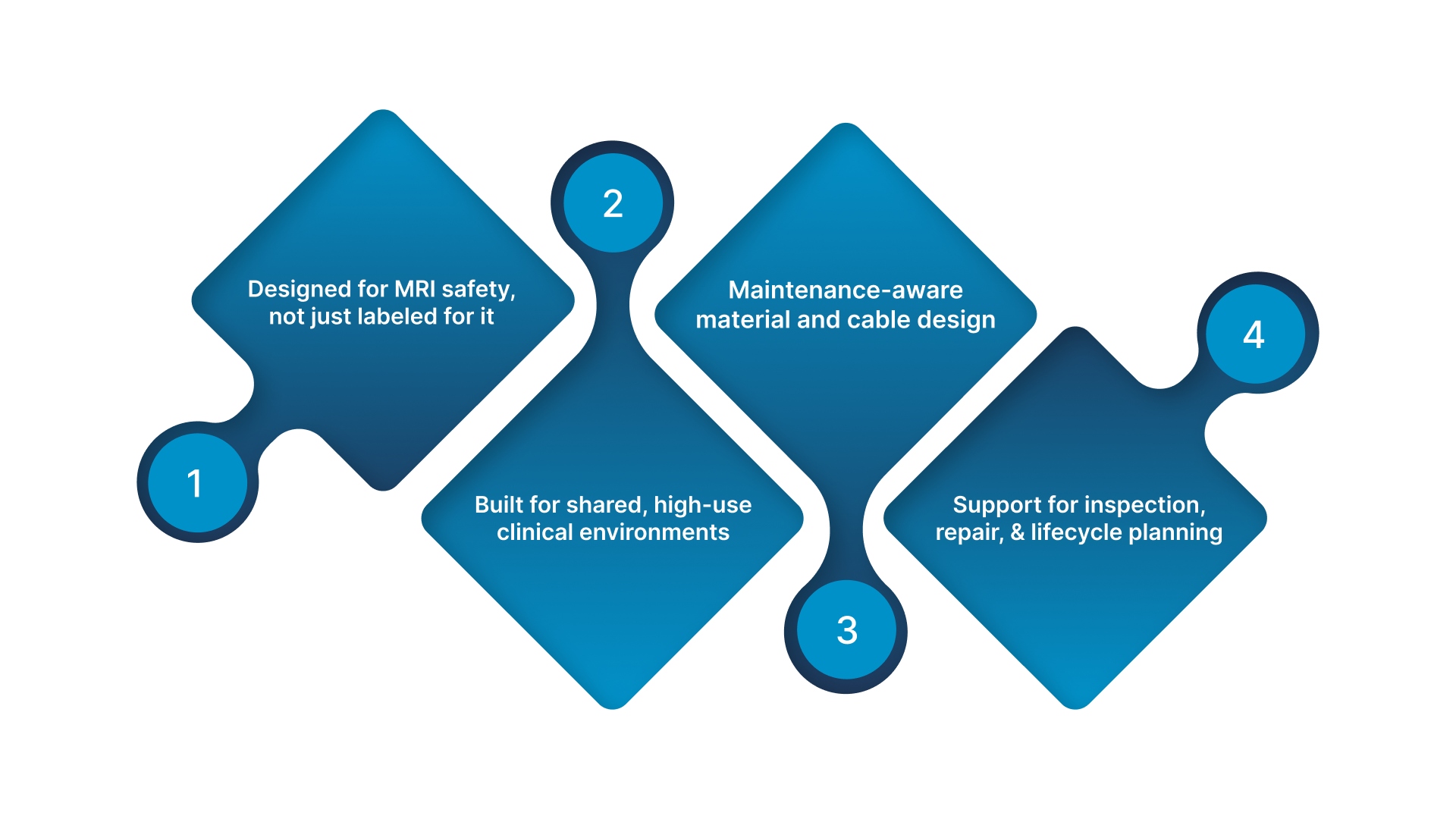
Designed for MRI safety, not just labeled for it: Scan Sound MRI headphones are engineered using non-magnetic materials and construction methods appropriate for MRI scan rooms. Safety is treated as a system-level requirement that extends beyond initial compatibility claims. Design choices aim to ensure predictable behavior in the MRI environment throughout the usable life of the product, even as it experiences normal wear.
Built for shared, high-use clinical environments: Unlike personal headphones, MRI headphones in hospitals and imaging centers are used continuously by different patients. Scan Sound designs account for this reality by focusing on durability, reinforced components, and materials that can tolerate repeated handling. This makes it easier for departments to maintain consistent performance without frequent replacements.
Maintenance-aware material and cable design: Routine cleaning and inspection are unavoidable in clinical settings. Scan Sound selects materials that are compatible with standard healthcare cleaning practices and designs cables and strain reliefs to reduce fatigue from coiling, unplugging, and repositioning. These features support longer service life and make it easier for staff to identify wear before it becomes a problem.
Support for inspection, repair, and lifecycle planning: Scan Sound products are designed so that wear is visible rather than hidden. This supports routine inspection and helps imaging teams make informed decisions about repair or replacement. From a procurement perspective, this approach supports better lifecycle planning and more predictable equipment ownership costs.
Because Scan Sound offers multiple MRI headphone configurations, imaging teams can select solutions that align with their specific workflows, patient populations, and scanner environments. This also makes it possible to interlink related product pages where fit, configuration, or use case details are relevant, without disrupting the educational purpose of this guide.
By designing MRI headphones with safety, maintenance, and longevity in mind from the start, Scan Sound supports imaging departments that need reliable, repeatable performance in demanding clinical environments.
Create your own custom MRI stereo system that aligns with your scanner room setup, patient volume, and maintenance expectations.
When to Repair, Replace, or Retire MRI Headphones
Even with good cleaning and preventive maintenance, MRI headphones do not last indefinitely. Knowing when maintenance is no longer sufficient helps imaging teams avoid safety risks, workflow disruptions, and last-minute equipment shortages.
Some issues can be addressed through routine maintenance or minor repairs. Others indicate that headphones are no longer appropriate for continued use in the MRI environment.
Situations where repair or continued use may still be appropriate include:
Early signs of cable stress that do not affect function
Ear cushions that are worn but replaceable
Cosmetic wear that does not compromise structure or safety
However, certain conditions signal that headphones should be removed from service. These include:
Cracked or separating housings
Exposed wiring or significant cable damage
Components that no longer fit securely or stay in place
Changes that make MRI compatibility uncertain
Delaying replacement can have downstream effects. A headphone failure during patient setup can lead to scan delays, rescheduling, or increased patient anxiety. From a safety perspective, using accessories with questionable integrity introduces avoidable risk into the scan room.
Planning for replacement before failure occurs supports smoother operations. Tracking age, usage intensity, and inspection findings can help departments retire equipment predictably rather than reactively. This approach also supports budgeting and procurement planning by reducing emergency purchases.
Knowing when to repair, replace, or retire MRI headphones is part of responsible equipment stewardship. It helps protect patients, supports staff confidence, and keeps imaging workflows running reliably.
If replacement is the safer option, view MRI headphone models designed for long service life in shared clinical settings.
Suggested Read: Safely Share Headphones by using Disposable Covers
Building Maintenance Into MRI Department Protocols
MRI headphone maintenance is most effective when it is part of normal department routines rather than an extra task added during busy shifts. Clear, repeatable protocols help ensure that safety and hygiene standards are met consistently, regardless of staffing changes or patient volume.
Integrating maintenance into existing workflows starts with clarity. Teams benefit from clearly defining what should happen between patients, daily, and on a scheduled basis. When expectations are simple and well understood, compliance becomes easier.
Practical ways to embed maintenance into MRI protocols include:
Including a quick visual headphone check in pre-scan setup
Aligning cleaning steps with existing infection control procedures
Assigning responsibility for periodic inspections or reviews
Documenting issues so patterns can be identified over time
Documentation does not need to be complex to be useful. Even basic tracking of recurring issues or replacement timing can help departments anticipate needs and avoid surprises.
Standardizing maintenance practices also supports regulatory and accreditation readiness. Consistent processes demonstrate that accessories used in the MRI environment are managed with the same care as other patient-facing equipment.
By making MRI headphone maintenance part of routine operations, departments reduce reliance on individual memory and create a safer, more predictable environment for patients and staff alike. For departments standardizing MRI equipment, explore stereo system kits designed for consistent performance and easier long-term maintenance.
Next Steps: Getting Guidance for Your MRI Environment
Every MRI environment is different. Patient populations, scanner configurations, throughput demands, and infection control requirements all influence how headphones are used and maintained. Because of this, general guidance is most effective when paired with application-specific support.
If your team is unsure whether existing MRI headphones are still appropriate for continued use, it may be helpful to review factors such as usage intensity, cleaning frequency, and inspection findings. These details often reveal whether maintenance practices are sufficient or if replacement planning should begin.
Imaging departments may also benefit from guidance when:
Evaluating headphones for new or upgraded MRI systems
Addressing recurring wear or maintenance issues
Planning replacements for shared, high-use environments
Ensuring compatibility with existing MRI safety protocols
Scan Sound works with hospitals and imaging centers to help match MRI audio solutions to real-world clinical needs. Support typically focuses on compatibility, durability, and long-term use rather than one-size-fits-all recommendations.
Seeking guidance early can help departments make informed decisions, reduce last-minute disruptions, and maintain confidence that patient-facing accessories support safe and consistent MRI operations.
Not all MRI headphones are designed for repeated clinical use. Explore Scan Sound’s MRI-compatible headphones engineered for safety, durability, and maintenance efficiency.
FAQs
Q: Why is MRI headphones maintenance important?
A: MRI headphones maintenance is important because these accessories are shared, patient-facing equipment used in a high-risk environment. Proper maintenance helps protect patient safety, supports infection control, and prevents scan delays caused by unexpected equipment failure.
Q: How often should MRI headphones be maintained?
A: MRI headphones should be visually inspected daily and cleaned between every patient according to facility protocols. More thorough preventive checks should be performed regularly to identify cable wear, housing damage, or degraded ear cushions before they affect safety or performance.
Q: Is cleaning MRI headphones the same as maintaining them?
A: No. Cleaning focuses on infection control between patients, while maintenance focuses on long-term safety, condition, and reliability. MRI headphones can look clean but still be unsafe if cables, housings, or components are worn or damaged.
Q: Can MRI headphones lose compatibility over time?
A: Yes. Even if headphones were originally MRI-safe or MRI-compatible, wear such as cracked housings, cable fatigue, or loosened components can compromise safety over time. Routine inspection is essential to confirm continued suitability for MRI use.
Q: What are the most common maintenance issues with MRI headphones?
A: Common issues include cable strain near connectors, fraying or stiffness in cables, worn ear cushions, and small housing cracks caused by repeated handling and cleaning. These issues often develop gradually and are easiest to manage when caught early.