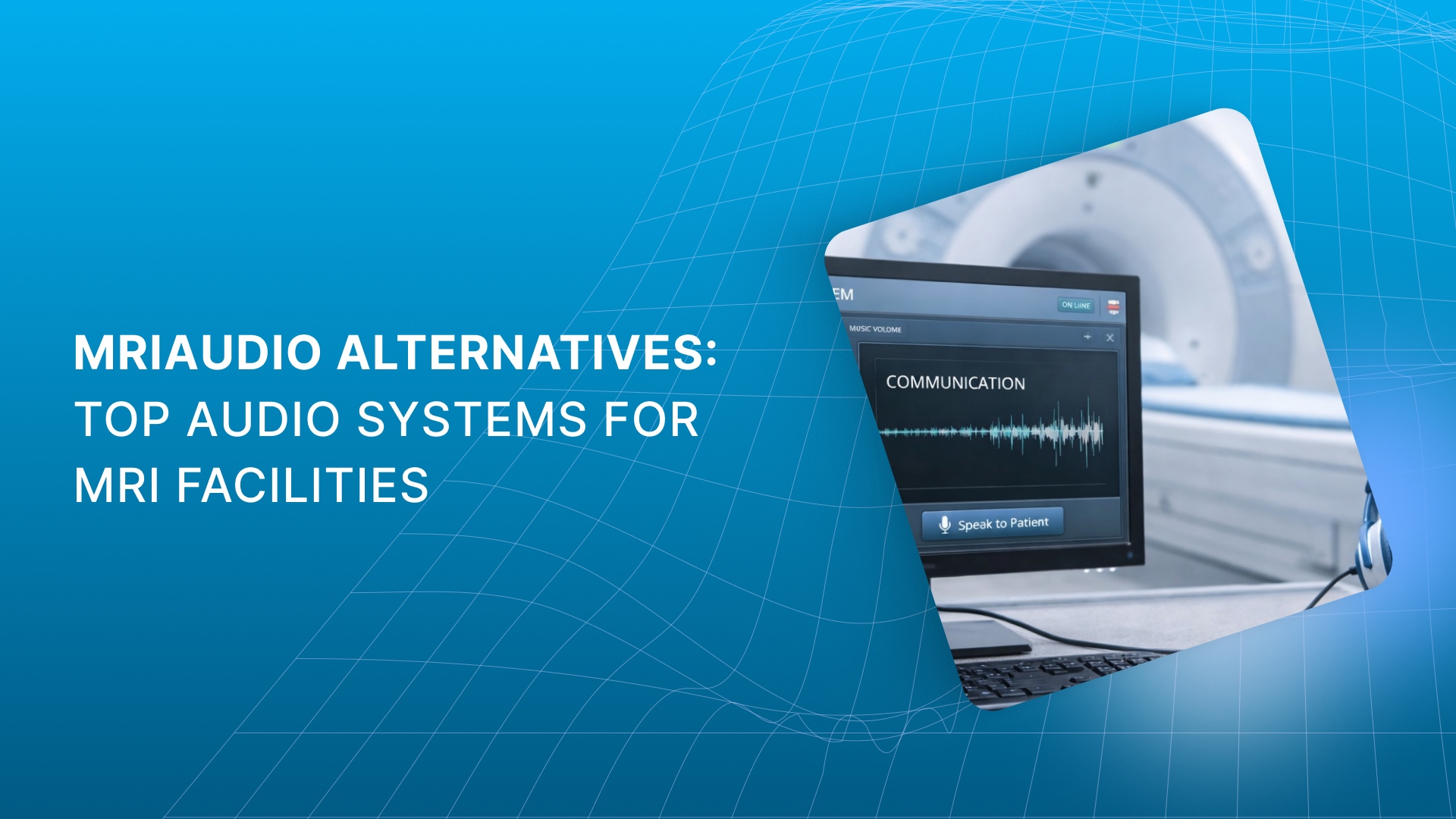
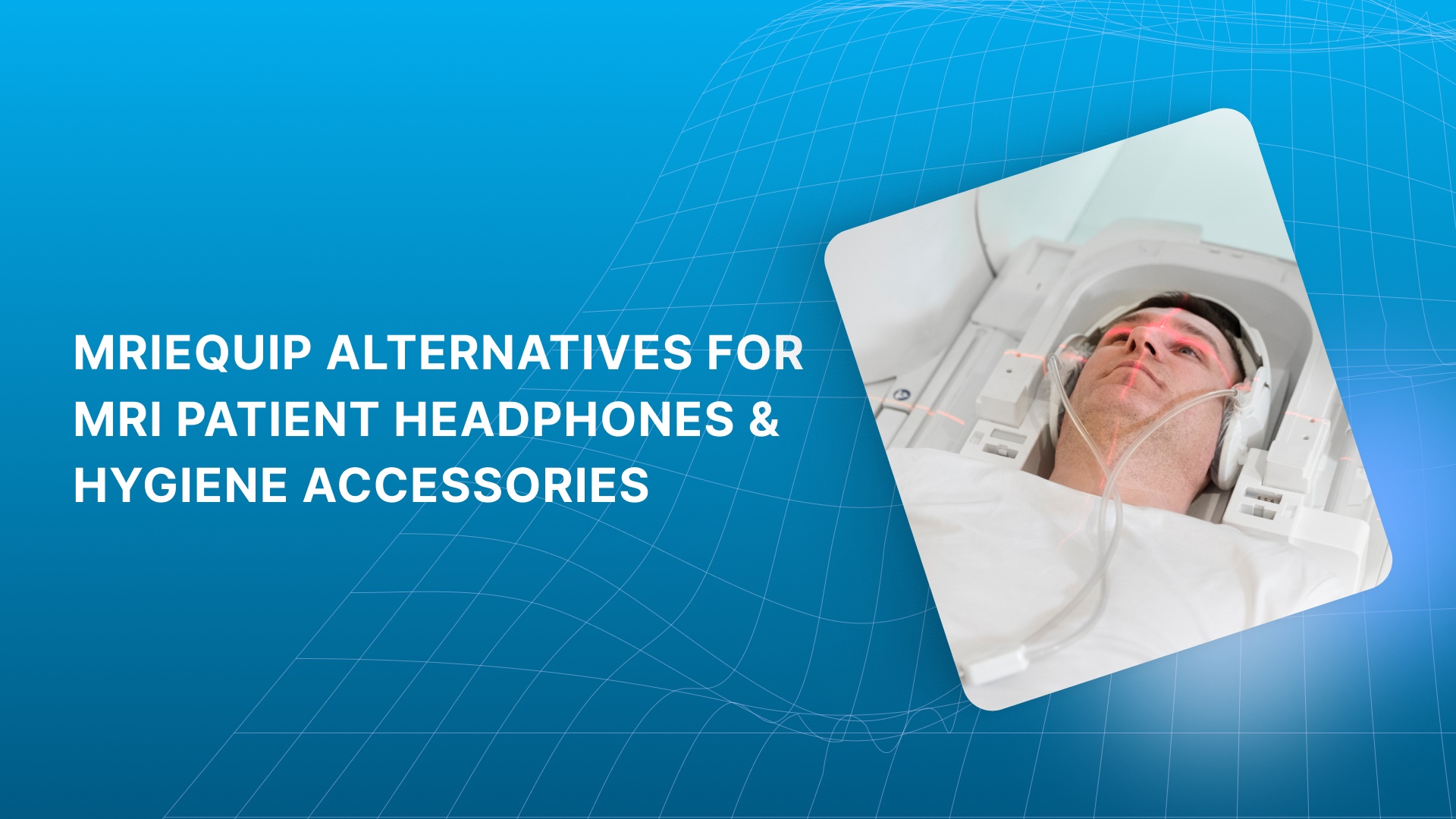
If you are searching for MRIequip alternatives, you are likely not just browsing vendors. Most buyers using this term are trying to replace or upgrade a specific MRI accessory that no longer meets their needs. In most cases, that accessory is MRI patient headphones or the sanitary covers used with them.
MRIequip is known for offering a broad range of MR-safe equipment. Many imaging centers begin evaluating alternatives when they need improved patient noise reduction, headphones that fit comfortably inside head coils, more reliable disposable headset covers, or clearer guidance on scanner and audio system compatibility.
For facilities focused on MRI patient audio rather than general MR-safe room equipment, several specialized manufacturers serve as practical alternatives. These vendors tend to focus narrowly on patient communication, comfort, and hygiene rather than maintaining a wide catalog of unrelated MR-safe products.
Unlike broad MR-safe suppliers, audio-focused manufacturers typically address a specific set of challenges. These include reducing perceived scan noise, supporting clear technologist-to-patient communication, and simplifying hygiene workflows between exams.
Other alternatives generally fall into two groups. The first includes audio system vendors that bundle headphones with music or video platforms. The second includes headset manufacturers focused on low-profile designs intended to fit more easily inside tight head coil environments.
Choosing the right alternative depends less on brand name and more on how your MRI suite operates. Patient volume, infection-control workflow, and existing scanner audio connections all affect which option is the best fit. The sections that follow break down these differences so you can compare options realistically before requesting quotes or samples.
Key Takeaways
“MRIequip alternatives” most often refers to patient audio and hygiene accessories, not a full replacement for all MR-safe room equipment.
MRI patient headphones and disposable headset covers are the primary comparison categories, driven by noise reduction, head coil fit, and infection-control workflow needs.
Choosing the right alternative depends on workflow, not brand name, including patient volume, coil constraints, scanner audio connections, and turnover requirements.
Head coil clearance and compatibility are common pain points when replacing MRI headphones, making pre-purchase confirmation critical.
Disposable headset covers directly affect hygiene efficiency and room turnover, especially in high-volume outpatient and imaging center settings.
Total cost of ownership matters more than upfront price, factoring in durability, replacement frequency, and consumable availability.
Scan Sound is often evaluated as an alternative when facilities want a focused solution for MRI patient headphones, hygiene accessories, and compatibility guidance rather than a broad MR-safe equipment catalog.
Verifying compatibility before requesting quotes or samples saves time, reduces returns, and helps ensure the alternative improves MRI workflow rather than disrupting it.
What “MRIequip Alternatives” Usually Means in Practice
When buyers search for MRIequip alternatives, they are rarely looking for a single company that replaces everything MRIequip sells. Instead, they are usually trying to solve one clearly defined operational issue inside the MRI suite.
In practice, this search intent typically falls into one of three scenarios.
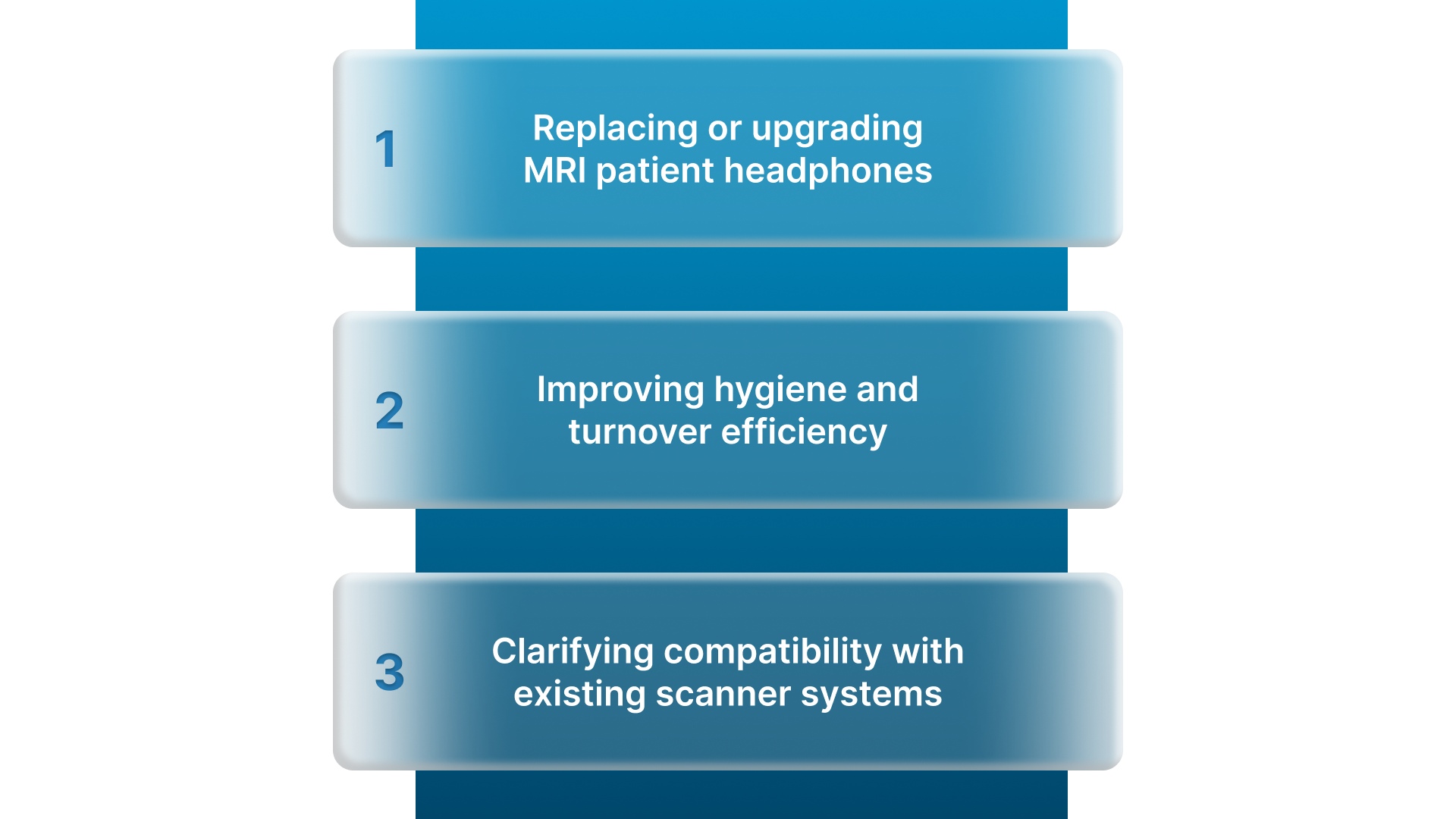
Replacing or upgrading MRI patient headphones: This is the most common reason the keyword appears in procurement searches. Facilities often want headphones that reduce scan noise more effectively, fit better inside head coils, or hold up longer under daily clinical use. In these cases, the comparison is not between full equipment catalogs but between specialized MRI audio manufacturers.
Improving hygiene and turnover efficiency: Many imaging centers begin looking for alternatives when disposable headset covers are difficult to source, poorly sized, or inconsistent in quality. Infection control teams and MRI technologists are often involved in this decision, especially in high volume outpatient settings where fast room turnover matters.
Clarifying compatibility with existing scanner systems: Some buyers arrive at this search after discovering that a replacement headset does not connect cleanly to their current scanner audio output. Instead of changing the entire audio setup, they look for alternatives that work with what they already have in place.
What this search usually does not mean is that the buyer is trying to replace all MR-safe equipment such as wheelchairs, stretchers, carts, or room furniture. Those items are typically sourced from dedicated MR-safe equipment distributors and are evaluated under a different procurement process.
Understanding which of these scenarios applies to your facility is critical. It prevents unnecessary comparisons, reduces back and forth with vendors, and helps ensure that quotes and samples you request are actually relevant to your MRI environment.
If replacing or upgrading MRI patient headphones is your primary concern, reviewing dedicated MRI headphone options can help narrow the comparison to solutions designed specifically for head coil use.
Also Read: Which Earpads or Cushions Will Fit on Headsets
The Practical Criteria MRI Teams Use to Compare MRIequip Alternatives
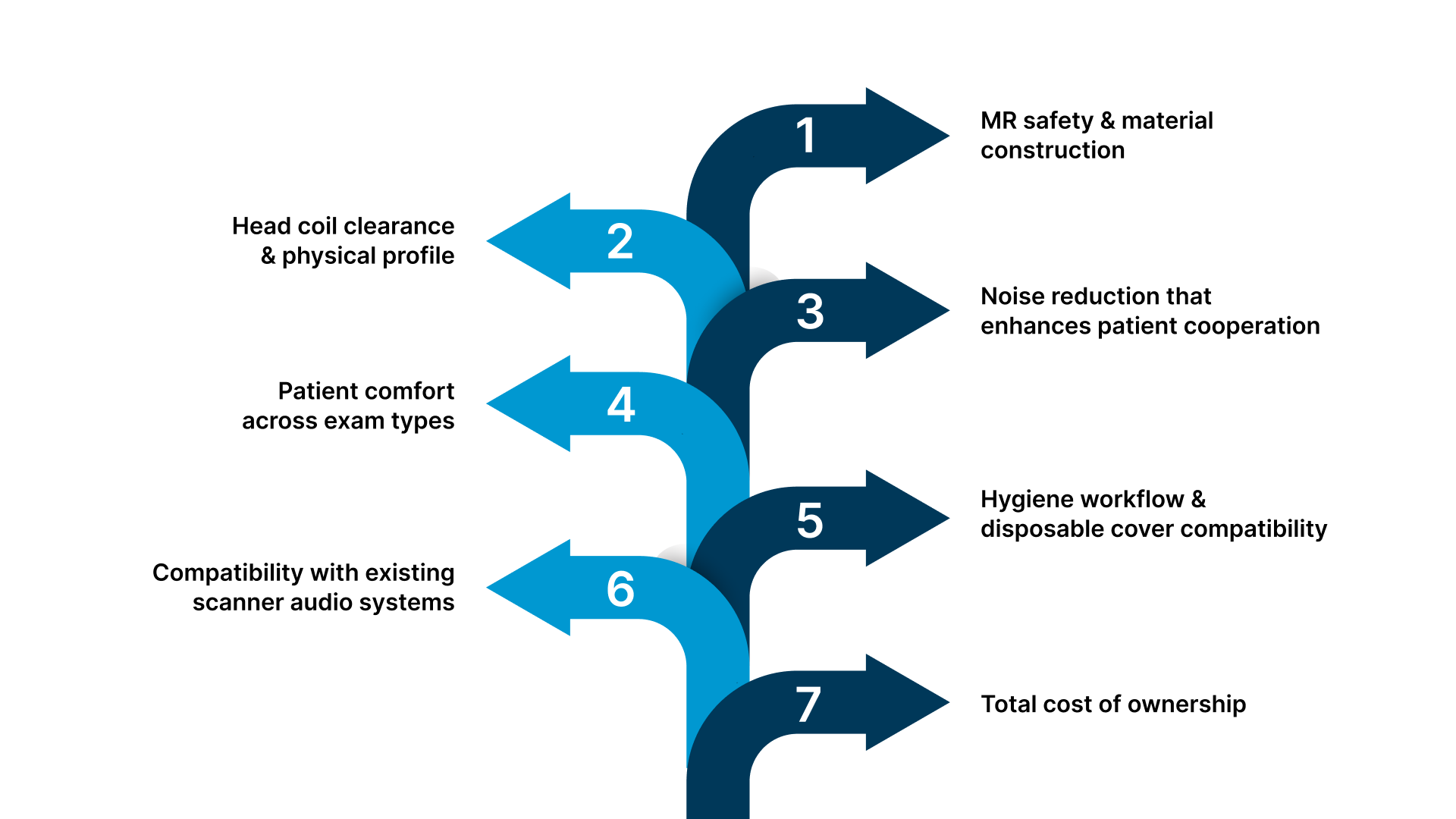
Once MRI teams narrow their search to a specific need, usually patient headphones or hygiene accessories, comparisons become less about brand names and more about how the equipment performs in daily clinical use. The following criteria are the ones MRI technologists, managers, and procurement teams most often rely on when evaluating MRIequip alternatives.
MR safety and material construction: Any alternative must be clearly labeled MR safe and built from non-magnetic materials. While this is a baseline requirement, differences still appear in cable routing, connector durability, and how well components hold up over time in the scan room environment.
Head coil clearance and physical profile: Headphones that look comfortable outside the scanner can create pressure points or coil interference once the patient is positioned. Low profile earcups and flexible tubing matter more than advertised comfort features. This is one of the most common reasons facilities replace existing headsets.
Noise reduction that supports patient cooperation: MRI headphones are not hearing protection devices, but they play a major role in reducing perceived scan noise. Effective alternatives balance attenuation with the ability for patients to hear instructions clearly. Poor balance here often leads to repeat sequences or longer exam times.
Patient comfort across exam types: Facilities serving pediatric, geriatric, or high anxiety patients often prioritize softer materials and stable fit. Headphones that shift during long exams or press unevenly against the head coil can increase motion and compromise image quality.
Hygiene workflow and disposable cover compatibility: Disposable headset covers are only effective when they fit properly and can be changed quickly between patients. MRI teams often evaluate whether covers tear during placement, stay in place during scans, and integrate smoothly with existing cleaning protocols.
Compatibility with existing scanner audio systems: One of the most overlooked criteria is how easily a headset connects to the scanner already in use. Alternatives that require minimal adapters and clear setup guidance reduce delays and prevent last minute workarounds by technologists.
Total cost of ownership: Purchase price is only part of the decision. Replacement frequency, availability of consumables, lead times, and consistency of supply all affect long term cost. Facilities often switch vendors when consumables become unreliable or backordered.
These criteria help explain why many facilities choose Scan Sound as an alternative. Scan Sound focuses on durability, compatibility support, and hygiene accessories designed specifically for MRI workflows rather than offering a broad but shallow equipment catalog.
For facilities actively comparing options, reviewing MRI patient headphones alongside compatible accessories makes it easier to evaluate comfort, fit, durability, and hygiene workflow together.
Also Read: MRI Headphones: Your Guide to a Quieter Scan
MRI Patient Headphones as an MRIequip Alternative
When MRIequip alternatives are evaluated, patient headphones are the most frequently compared product. The goal is rarely to change how the MRI suite operates. Most facilities want a headset that works with their current scanner, fits inside existing coils, and improves patient comfort without adding complexity.
MRI headphone alternatives generally fall into three groups.
Standalone MRI patient headphones: These are designed to connect directly to the scanner audio output without requiring a full audio or video system. Facilities choose this option when they want reliable noise reduction and clear communication while keeping their current workflow intact. This is where Scan Sound is most often evaluated as an alternative to MRIequip.
Low profile or flat headset designs: Some manufacturers focus on minimizing earcup thickness to accommodate tighter head coils. These options can work well in specific setups but may trade off comfort or noise attenuation depending on the design.
Headphones bundled with audio systems: Other alternatives include headsets that are part of integrated music or video platforms. These are typically selected during new suite builds or major upgrades rather than as a direct replacement for existing headphones.
For most imaging centers replacing MRIequip headphones, the decision comes down to fit, compatibility, and consistency of supply. Facilities that want a focused solution without committing to a full system often narrow their comparison to standalone MRI headphone manufacturers.
Facilities that want a focused replacement without changing their existing scanner setup can review standalone MRI patient headphones designed to integrate with current MRI audio systems.
Disposable Headset Covers and Hygiene Considerations
For many imaging centers, the decision to move away from MRIequip is driven as much by hygiene workflow as by the headphones themselves. Disposable headset covers play a direct role in infection control, patient perception, and exam turnover time.
When evaluating alternatives, MRI teams typically focus on three practical factors.
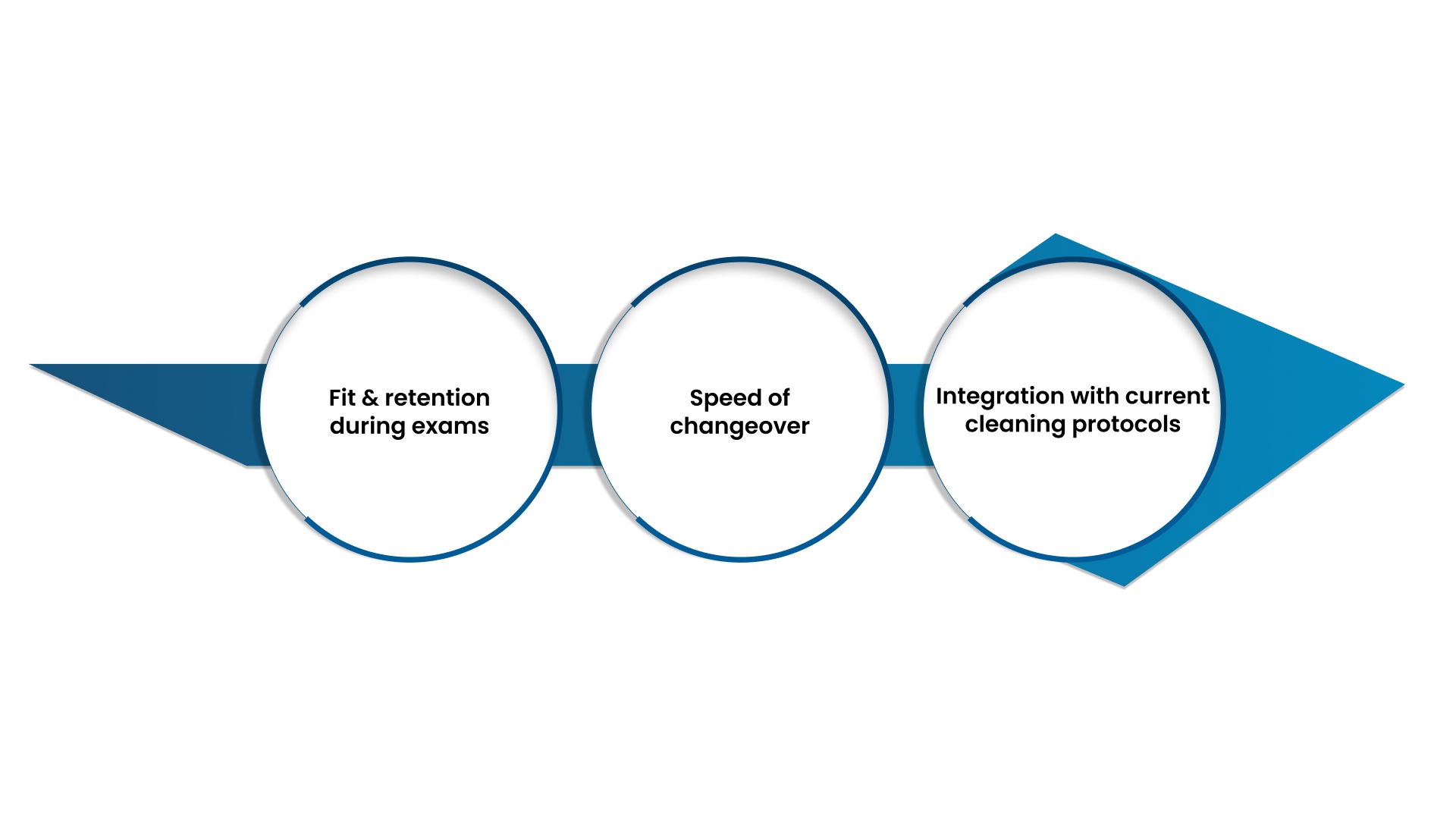
Fit and retention during exams: Covers that are too small tear during placement, while oversized covers can slip off once the patient is positioned. Proper sizing helps the cover stay in place throughout the scan without interfering with sound or coil positioning.
Speed of changeover: High volume MRI suites need covers that can be applied and removed quickly between patients. Consistent sizing and reliable elasticity reduce handling time and help technologists maintain room flow.
Integration with existing cleaning protocols: Disposable covers work best when they complement, not replace, established cleaning procedures. Facilities often look for alternatives that support single patient use without adding extra steps or uncertainty.
This is one area where Scan Sound is frequently chosen as an alternative. Scan Sound offers disposable headset covers designed specifically for MRI headphones, making it easier for facilities to standardize hygiene practices across rooms.
To support faster room turnover and consistent infection-control practices, imaging centers often review disposable MRI headset covers and related headphone hygiene accessories together.
When Scan Sound Is the Right MRIequip Alternative and When It Is Not
Scan Sound is often selected as an MRIequip alternative when a facility’s priority is patient audio performance and hygiene efficiency, not broad MR-safe room equipment.
Scan Sound is typically a good fit when:
You need standalone MRI patient headphones that work with existing scanner audio systems
Head coil fit, patient comfort, and noise reduction are ongoing concerns
Disposable headset covers are part of your infection control workflow
You want clear guidance on compatibility rather than trial and error
Scan Sound may not be the best fit when:
You are sourcing general MR-safe equipment such as wheelchairs, stretchers, or carts
You require a fully integrated music or video entertainment system as part of a new MRI suite build
Audio accessories are a minor consideration compared to other room infrastructure needs
Understanding this distinction helps facilities avoid unnecessary comparisons and focus on vendors aligned with their actual use case.
If your primary need is improving MRI patient audio or streamlining hygiene practices, Scan Sound is often evaluated as a focused and reliable alternative. If not, narrowing your requirements first will lead to faster and more accurate purchasing decisions.
How to Confirm Compatibility Before Choosing an MRIequip Alternative
Compatibility issues are one of the most common reasons facilities replace MRI accessories. Before selecting an MRIequip alternative, it is important to confirm that new headphones or covers will work with your existing setup.
Most MRI teams start by identifying three details. The scanner manufacturer and model determine the audio output type. The current headset style affects fit inside the head coil. The existing cleaning and storage process influences which disposable covers will work best.
Facilities often run into problems when replacement headphones require unexpected adapters or when tubing and connectors do not route cleanly around the coil. These issues can delay exams and frustrate technologists.
This is where Scan Sound is frequently involved before purchase. Instead of trial and error, facilities can confirm scanner compatibility, headset fit, and cover sizing in advance.
Before purchasing, many facilities choose to confirm scanner compatibility and headset fit by reviewing custom MRI stereo system options or requesting guidance based on their existing MRI setup.
Next Steps if You Are Evaluating MRIequip Alternatives
Once you have narrowed your comparison, the most productive next step is confirming that an alternative will work in your specific MRI environment. This avoids unnecessary samples, returns, and delays during implementation.
Facilities typically move forward by doing three things. They confirm scanner make and model, review current headphone style and fit inside the head coil, and verify how disposable covers are handled between patients. With this information, vendors can provide accurate guidance rather than generic recommendations.
This is where Scan Sound is often contacted during the evaluation process. Facilities can request compatibility confirmation, headset recommendations, or help selecting the correct disposable cover size before requesting a formal quote.
If your primary goal is improving patient audio comfort or simplifying hygiene workflows, a short compatibility check can quickly determine whether Scan Sound is the right MRIequip alternative for your facility. Talk to us now!
FAQs
Q: What does “MRIequip alternatives” usually refer to?
A: In most cases, MRIequip alternatives refer to MRI patient headphones, disposable headset covers, and related audio or hygiene accessories, not a full replacement for all MR-safe room equipment like carts or wheelchairs.
Q: Why do imaging centers look for MRIequip alternatives?
A: Imaging centers typically look for alternatives when they need better head coil fit, improved patient noise reduction, more reliable disposable covers, clearer compatibility guidance, or more consistent supply for MRI patient audio accessories.
Q: Are MRIequip alternatives mainly about patient headphones?
A: Yes. MRI patient headphones are the most commonly compared product when facilities search for MRIequip alternatives. Fit inside head coils, patient comfort, durability, and scanner compatibility are the main drivers.
Q: Can MRI patient headphones be replaced without changing the MRI system?
A: In many cases, yes. Most facilities replace MRI patient headphones while keeping their existing scanner and audio output. Compatibility depends on the scanner model, connector type, and headset design.
Q: How important are disposable headset covers when comparing alternatives?
A: Disposable headset covers are a major factor. They directly affect infection control, room turnover time, and staff workflow. Poor fit or unreliable supply often prompts facilities to seek alternatives.