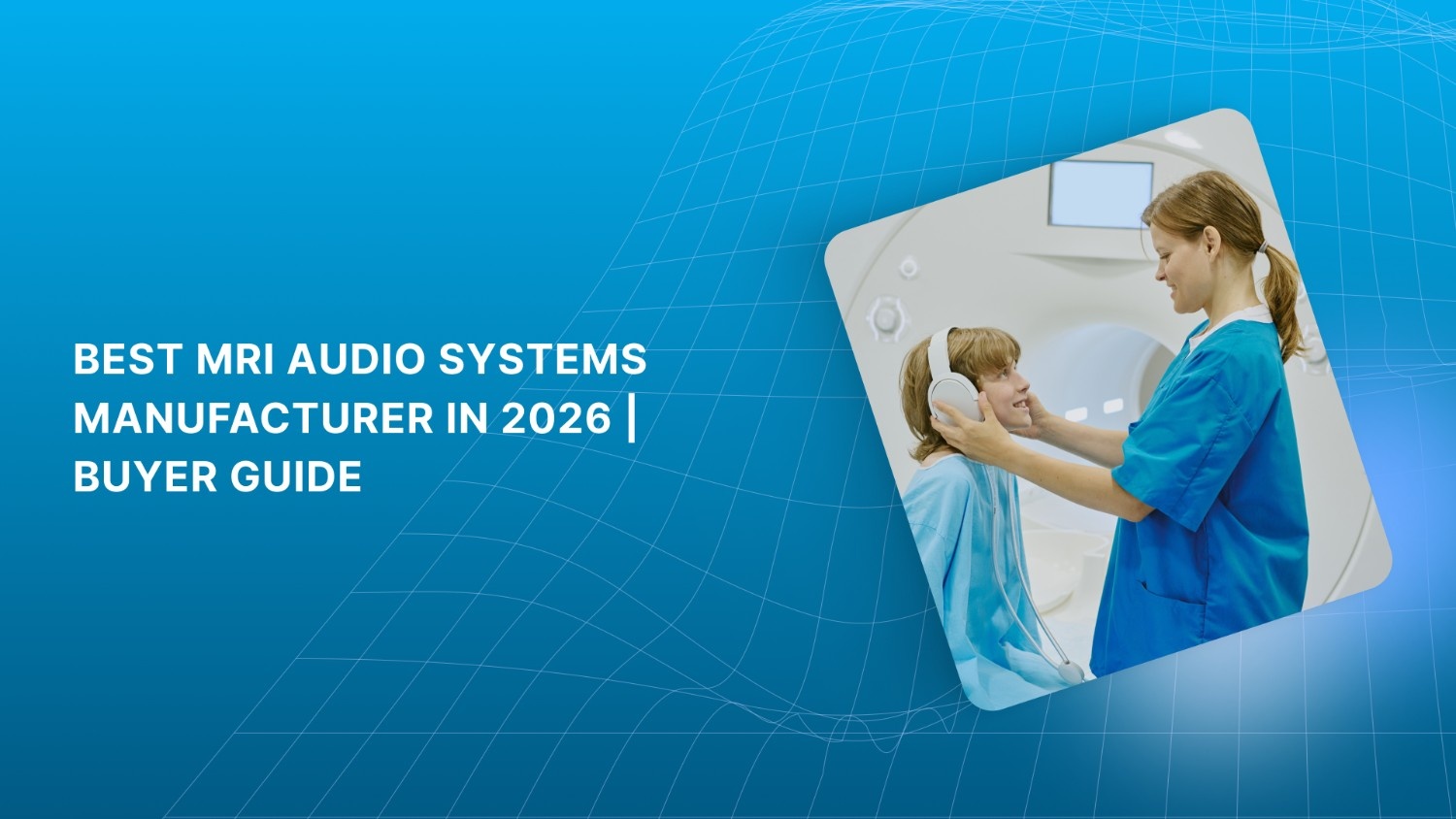
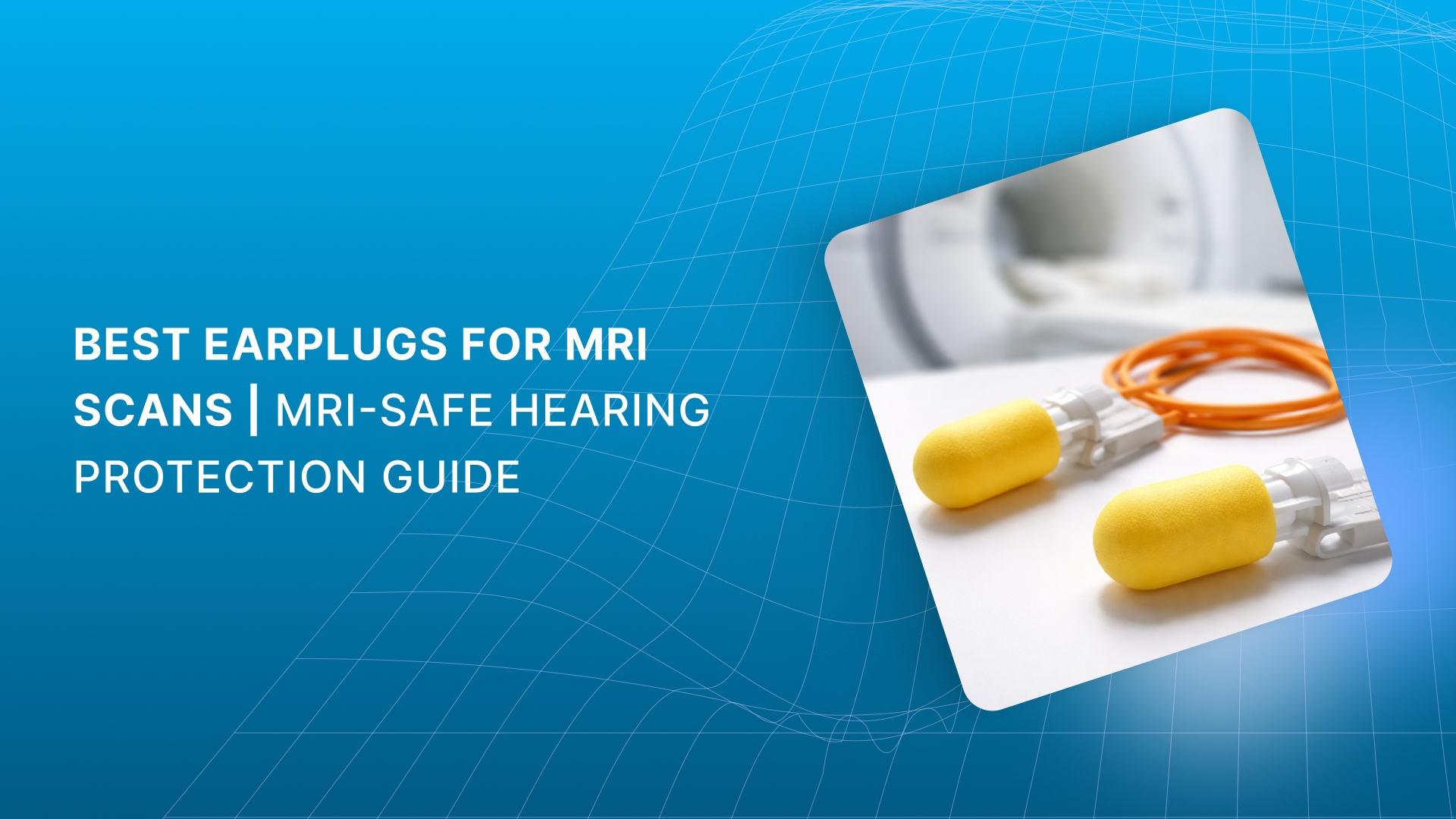
MRI scans are loud, enclosed, and highly controlled clinical procedures. Hearing protection is not an optional comfort item. It is a routine part of patient preparation designed to support safety, comfort, and successful imaging.
This is why choosing earplugs for an MRI scan follows a different standard than choosing earplugs for sleep, travel, or everyday noise. In MRI environments, the best earplugs are not defined by brand popularity or consumer reviews. They are defined by whether they are appropriate for use near a powerful magnet, compatible with imaging equipment, and reliable across a wide range of patients.
Imaging centers prioritize earplugs that can be used consistently, fit comfortably under head coils, and integrate smoothly into established workflows. For patients, this means the “best” earplugs are usually the ones provided and approved by the facility, not necessarily the ones found online.
This guide focuses on what makes earplugs effective and appropriate specifically for MRI scans. The goal is to clarify what matters in real imaging environments so patients and facilities alike can understand how hearing protection is selected and used in practice.
Key Takeaways
MRI scans are loud by design, and hearing protection is a standard and necessary part of every MRI exam, not an optional comfort item.
The best earplugs for an MRI scan are typically MRI-safe, soft foam earplugs provided by the imaging facility, because they are approved for use near strong magnetic fields and fit under head coils.
MRI-safe earplugs must be non-metallic, non-conductive, and low profile to avoid safety risks and equipment interference.
Imaging centers choose earplugs based on consistency, ease of use, equipment compatibility, patient tolerance, and workflow reliability, not brand popularity or consumer reviews.
Noise reduction ratings (NRR/SNR) are reference tools, not guarantees. Real-world effectiveness depends heavily on proper fit and consistent use during the scan.
Correct earplug insertion is critical. Even high-quality earplugs provide limited protection if they are not inserted properly.
Many facilities use earplugs together with MRI-safe headphones to improve comfort, support communication, and help patients remain still during the scan.
Hygiene and infection control matter. Most MRI earplugs are single-use and handled as part of a controlled clinical workflow.
Some patients, including children, people with anxiety, small ear canals, or hearing aids, may require additional attention or adjustments to ensure comfort and effectiveness.
For imaging centers, earplugs work best when viewed as part of a complete MRI sound environment, not as standalone accessories. A systems-based approach supports safer, more efficient, and more patient-centered imaging.
What Are the Best Earplugs for an MRI Scan?
For most MRI scans, the best earplugs are MRI-safe, soft foam earplugs that are properly inserted and provided by the imaging facility.
In clinical practice, these earplugs are preferred because they:
Are compatible with MRI safety requirements
Fit under head and neck coils without interference
Provide reliable noise reduction across many patients
Can be used consistently within established workflows
In many imaging centers, earplugs are also used together with MRI-safe headphones or earmuffs. The earplugs provide the primary noise reduction, while the headphones add comfort and, in some cases, communication or music. This combination helps patients tolerate loud scan sequences and remain still.
The most important factor is not a specific brand or rating. The best earplugs for an MRI scan are the ones that are approved for MRI use, fit correctly, and are used consistently throughout the exam.
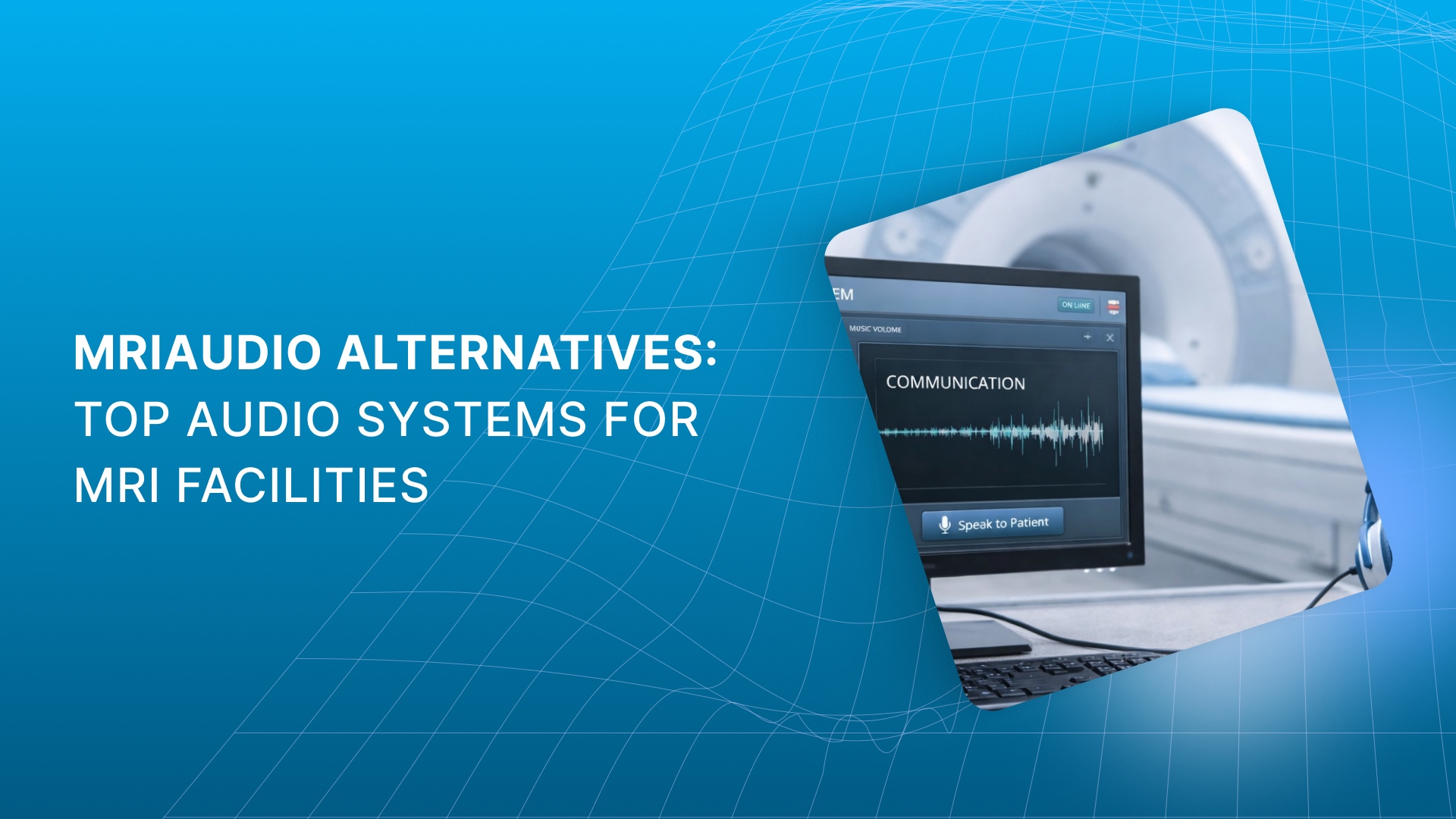
For facilities looking to standardize sound management across scanners, MRI stereo system kits help integrate patient audio, communication, and hearing protection into a single workflow.
Why MRI Scans Require Hearing Protection
MRI scanners produce loud, repetitive sounds during image acquisition. These sounds occur when rapidly changing magnetic fields cause internal components of the scanner to vibrate. The result is the familiar knocking, thumping, or banging noise patients hear during a scan.
The intensity of MRI noise varies depending on the scanner, the body part being imaged, and the specific imaging sequence. Some sequences are short and moderately loud, while others are longer and significantly more intense. Because patients are positioned inside a confined space and exposed to this noise for extended periods, hearing protection is used as a standard precaution.
Beyond hearing comfort, noise management plays an important role in scan success:
Loud, unexpected sounds can increase anxiety or claustrophobia
Discomfort may cause patients to move or tense during imaging
Patient movement can lead to motion artifacts and repeat scans
Providing hearing protection helps reduce these risks by making the scan more tolerable and predictable. When patients are more comfortable, they are more likely to remain still, which supports image quality and efficient scan completion.
For these reasons, hearing protection is not an optional add-on in MRI environments. It is a routine component of patient preparation and an essential part of delivering safe and effective imaging.
Also Read: Which Earpads or Cushions Will Fit on Headsets
What Makes Earplugs MRI Safe
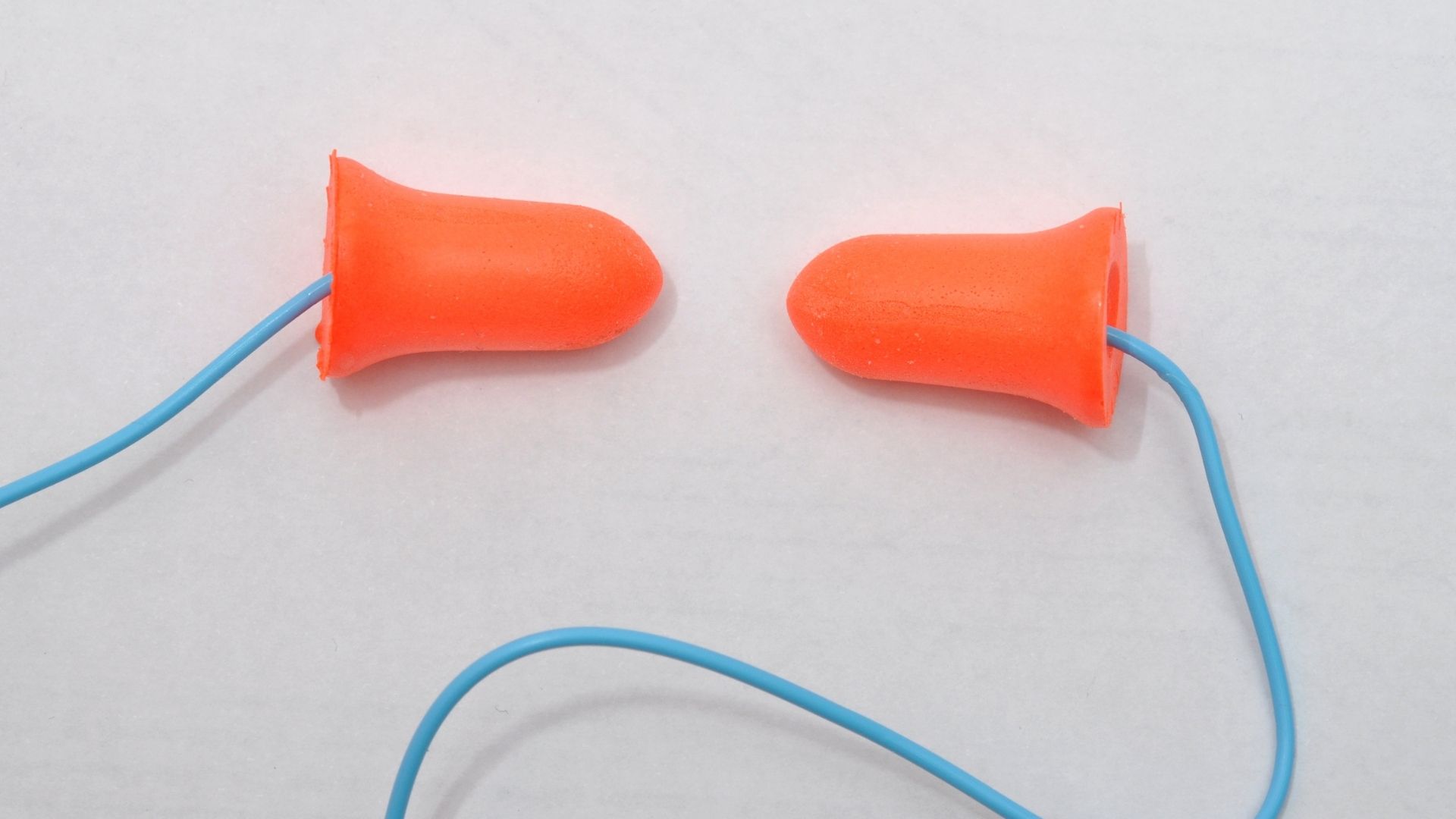
In MRI environments, the term MRI safe has a specific and practical meaning. Earplugs used during an MRI scan must be suitable for use near a powerful magnetic field and must not introduce any risk to the patient, staff, or imaging equipment.
MRI-safe earplugs share a few essential characteristics:
Non-metallic construction, with no ferromagnetic parts that could be attracted to the magnet
Non-conductive materials that do not heat up during scanning
Low-profile designs that do not interfere with head coils or patient positioning
Because MRI safety standards are tightly controlled, imaging facilities typically provide earplugs that have already been evaluated and approved for use in their scan rooms. This reduces uncertainty and ensures that every patient receives hearing protection that meets the facility’s safety requirements.
Personal earplugs brought from home may not meet these standards, even if they seem simple or familiar. Some consumer earplugs contain dense filters, internal components, or materials that have not been assessed for MRI compatibility. For this reason, facilities often discourage or restrict the use of outside ear protection.
In MRI settings, safety is about predictability and control. MRI-safe earplugs are chosen not just for comfort, but for their known behavior in the magnetic environment and their compatibility with established imaging protocols.
Recommended Read: Benefits of Disposable Headphone & Headset Covers
Types of Earplugs Used for MRI Scans
Imaging facilities rely on a small number of earplug types that have proven to be practical, safe, and compatible with MRI environments. Each category is used for specific reasons, depending on patient needs and clinical workflow.
Foam earplugs
Foam earplugs are the most commonly used option in MRI settings.
Made from soft, compressible material that expands inside the ear canal
Low profile, which fits easily under head and neck coils
Widely available in single-use formats
Pre-molded or flanged earplugs
These earplugs hold their shape rather than expanding.
Designed for quicker placement and removal
Often used when consistent insertion is needed across many patients
Typically available in standard sizes
Silicone putty earplugs
Silicone putty earplugs are used less frequently and in more specific situations.
Molded to the outer ear rather than inserted deeply
Sometimes used for patients with sensitivity to in-ear pressure
May be selected for short scans or special comfort needs
Pediatric earplugs
Children require earplugs designed specifically for smaller ear canals.
Reduced size and softer materials
Emphasis on comfort and tolerance
Often used alongside additional reassurance or supervision
These categories reflect how earplugs are used in real MRI workflows. Selection is based on practicality and compatibility rather than consumer-style customization or branding.
How Imaging Centers Determine the Best Earplugs for MRI Scans
In MRI environments, the “best” earplugs are chosen based on how well they perform across hundreds or thousands of scans, not how they perform for a single user. Imaging centers evaluate earplugs as part of a larger clinical workflow where safety, consistency, and efficiency matter as much as comfort.
Key factors facilities consider include:
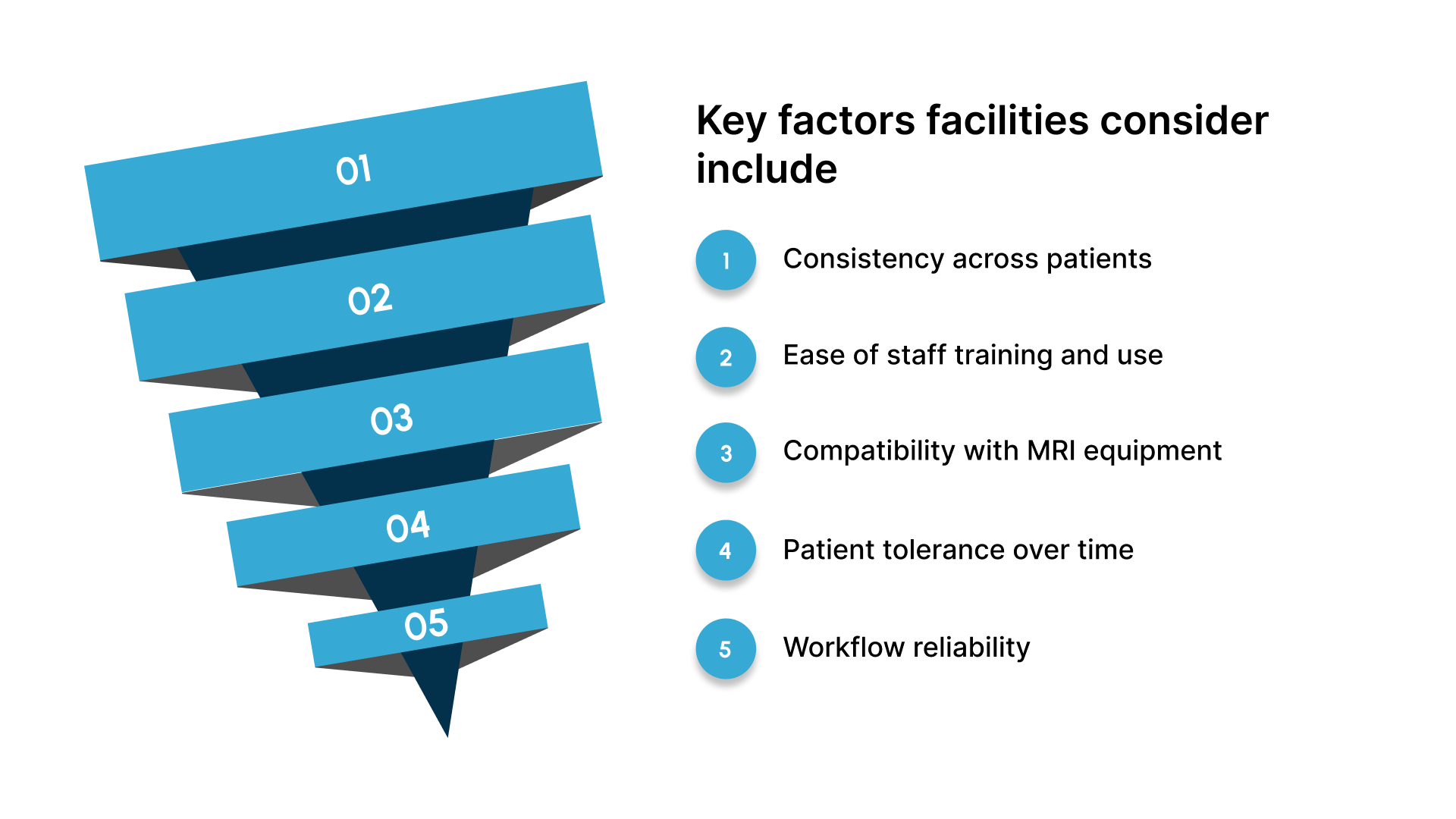
Consistency across patients:Earplugs must work reasonably well for a wide range of ear shapes, ages, and sensitivities without requiring customization.
Ease of staff training and use: Technologists need earplugs that can be fitted quickly and explained clearly, especially in high-throughput imaging centers.
Compatibility with MRI equipment: Earplugs must fit comfortably under head and neck coils without shifting during patient positioning.
Patient tolerance over time: Some scans are short, while others last much longer. Earplugs must remain comfortable and stay in place throughout the exam.
Workflow reliability: Facilities favor earplugs that integrate smoothly into existing preparation routines and do not create delays or repeated adjustments.
This evaluation process reflects a systems-based mindset. Hearing protection is not assessed in isolation, but as one component of the overall MRI sound environment. Imaging centers increasingly look at how earplugs work alongside patient communication, comfort measures, and room-to-room consistency.
Scan Sound’s Systems-Based Approach to MRI Sound Management
This is the same approach taken by Scan Sound, which designs MRI audio and hearing protection solutions for shared, high-noise clinical environments. Rather than focusing on individual accessories, the emphasis is on predictable performance, compatibility, and repeatability across scanners, staff, and patient populations.
Imaging centers with different scanners, coils, and patient populations may benefit from the ability to build a custom MRI audio system that fits their specific environment.
Rather than optimizing for niche features or maximum theoretical performance, imaging centers prioritize predictable results. An earplug that performs well most of the time, for most patients, and with minimal staff intervention is more valuable than one that performs exceptionally only under ideal conditions. This is why institutional choices often differ from consumer recommendations and why a systems-level approach to MRI sound management supports safer, more efficient imaging day after day.
Understanding Noise Reduction Ratings for MRI Use
Earplugs are often labeled with a Noise Reduction Rating, commonly shown as NRR, or with a Single Number Rating, known as SNR. These ratings are based on laboratory testing and are intended to indicate the potential amount of noise reduction an earplug can provide under controlled conditions.
In MRI settings, these numbers are best understood as reference points, not guarantees. They allow facilities to compare earplugs within the same category and set minimum performance expectations, but they do not predict exactly how much noise a specific patient will experience during a scan.
Several factors limit how directly ratings translate to MRI use:
Laboratory testing assumes ideal insertion and fit
Real patients vary widely in ear canal shape and comfort tolerance
MRI noise includes a broad range of frequencies and intensities
Because of this, imaging centers rarely select earplugs based on ratings alone. Instead, ratings are used to screen out options that fall below acceptable benchmarks, while real-world performance is evaluated through consistency and patient feedback.
In MRI environments, a moderately rated earplug that can be fitted correctly and reliably often provides better practical protection than a higher-rated earplug that is difficult to insert or uncomfortable. Ratings help inform decisions, but they are only one part of a much larger evaluation process.
Also Read: Sharing of Headphones and Headsets Created a Need for Disposable Covers
Proper Earplug Insertion During MRI Scans
Even when the right type of earplug is selected, hearing protection during an MRI scan depends heavily on how the earplugs are inserted. In clinical settings, incorrect insertion is one of the most common reasons patients report that earplugs did not reduce noise as expected.
For foam earplugs, which are widely used in MRI environments, proper insertion generally follows a simple process:
Roll the earplug tightly between clean fingers until it becomes narrow
Pull the outer ear upward and back to straighten the ear canal
Insert the earplug fully into the ear canal
Hold it in place for several seconds while it expands
When inserted correctly, the earplug should feel secure and comfortable, with only a small portion visible outside the ear. If the earplug loosens quickly or feels shallow, it may not be providing effective protection.
Common insertion issues in MRI settings include:
Insufficient rolling before insertion
Releasing the earplug before it fully expands
Hair, caps, or positioning aids dislodging the earplug during setup
Because MRI preparation happens quickly, imaging centers often rely on brief verbal instruction or visual cues to help patients achieve a proper fit. Small improvements in insertion technique can make a noticeable difference in comfort during the scan.
In MRI use, earplug effectiveness is determined as much by execution as by design. Proper insertion ensures that the hearing protection being used can perform as intended throughout the exam.
When Earplugs Are Combined With MRI Headphones
In many MRI environments, earplugs are used together with MRI-safe headphones or earmuffs rather than on their own. This layered approach is designed to improve overall comfort and support patient cooperation during the scan.
Earplugs typically provide the primary reduction of MRI noise. Headphones or earmuffs are then placed over the ears to add an additional barrier and, in some cases, allow for communication between the technologist and the patient. Some systems also offer music, which can help make the scanning experience feel less overwhelming.
Facilities consider several factors when using earplugs with headphones:
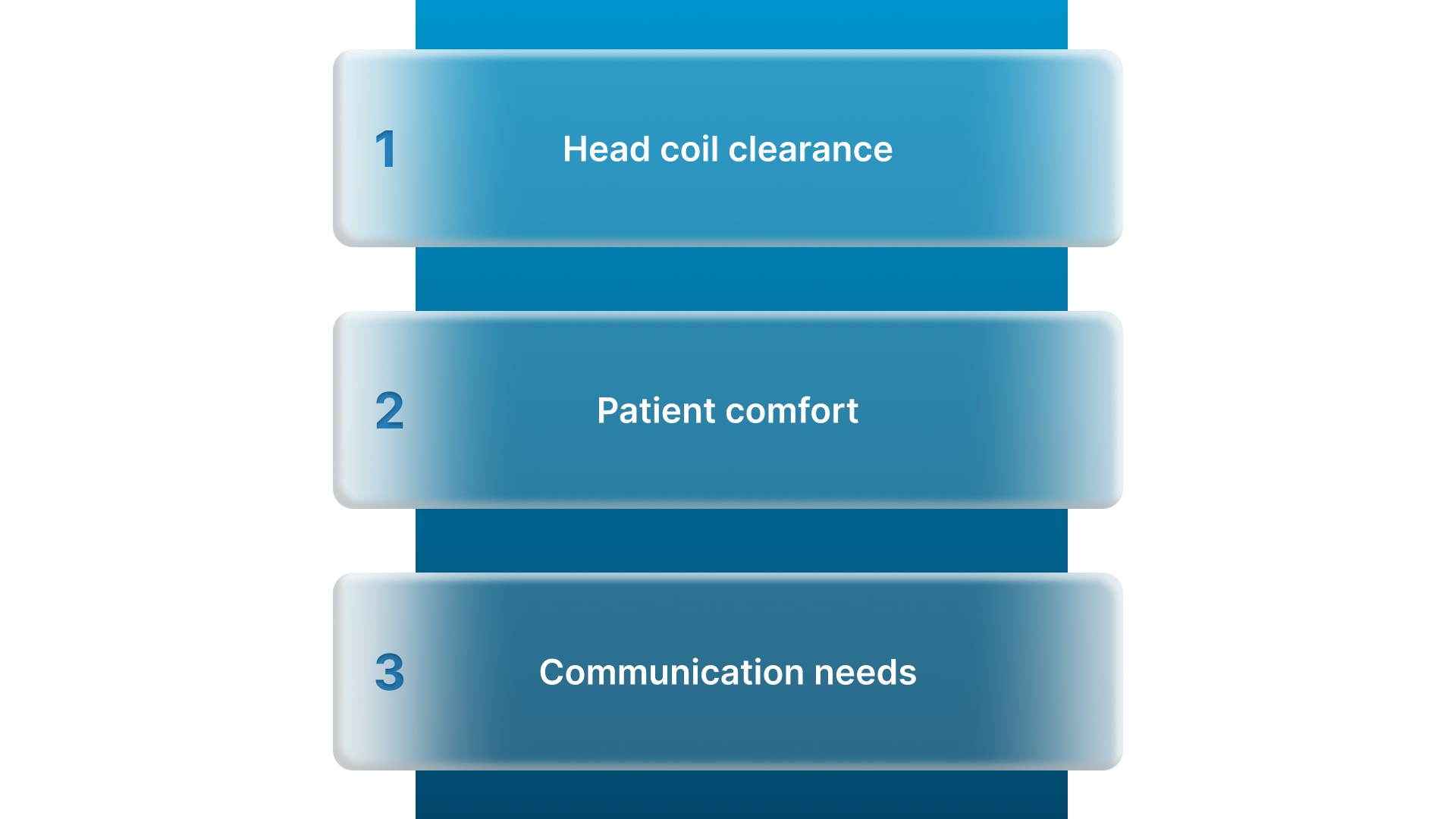
Head coil clearance: The combined setup must fit within the available space without shifting during positioning.
Patient comfort: Headphones can reduce the perception of sudden or sharp sounds that earplugs alone may not fully mask.
Communication needs: Two-way communication can reassure patients and allow technologists to give instructions during the scan.
The goal of combining earplugs with headphones is not to achieve a specific decibel number. It is to create a more tolerable and predictable sound environment that helps patients remain still and complete the scan successfully.
This layered approach reflects how MRI hearing protection is used in real clinical workflows, where comfort, safety, and image quality are closely linked.
Many imaging centers pair earplugs with MRI-safe headphones to improve comfort and communication during scans, especially for longer or louder sequences.
Hygiene and Infection Control Considerations
In MRI environments, earplugs are used in shared clinical spaces where hygiene and infection control are essential. Hearing protection must not only be effective, but also align with facility protocols designed to reduce cross-contamination and support safe patient care.
Key hygiene considerations include:
Single-use earplugs: Most MRI facilities rely on disposable earplugs that are discarded after each patient. This minimizes the risk of transferring contaminants between patients.
Individually wrapped versus dispenser-based options: Individually wrapped earplugs offer clear single-patient use and are easy to audit. Dispenser systems can be efficient in high-volume settings but require strict handling and maintenance practices.
Storage and handling: Earplugs must be stored in clean, controlled locations and handled with clean hands during patient preparation.
Workflow consistency: Standardized earplug selection and distribution reduce variability and help staff follow infection-control practices reliably, even during busy scanning schedules.
From an operational standpoint, hygiene-friendly earplugs simplify compliance. When staff do not have to make judgment calls about reuse or cleaning, preparation becomes faster and more predictable.
In MRI settings, hearing protection is part of the broader patient-contact workflow. Earplugs that support clear single-use practices and consistent handling help facilities maintain both safety standards and operational efficiency.
Maintaining hygiene and consistent performance often requires access to MRI headphone accessories designed for shared clinical use.
Special Considerations for Certain Patients
While standard MRI earplugs work well for most patients, some situations require additional attention to ensure hearing protection remains comfortable and effective throughout the scan.
Common scenarios that imaging centers account for include:
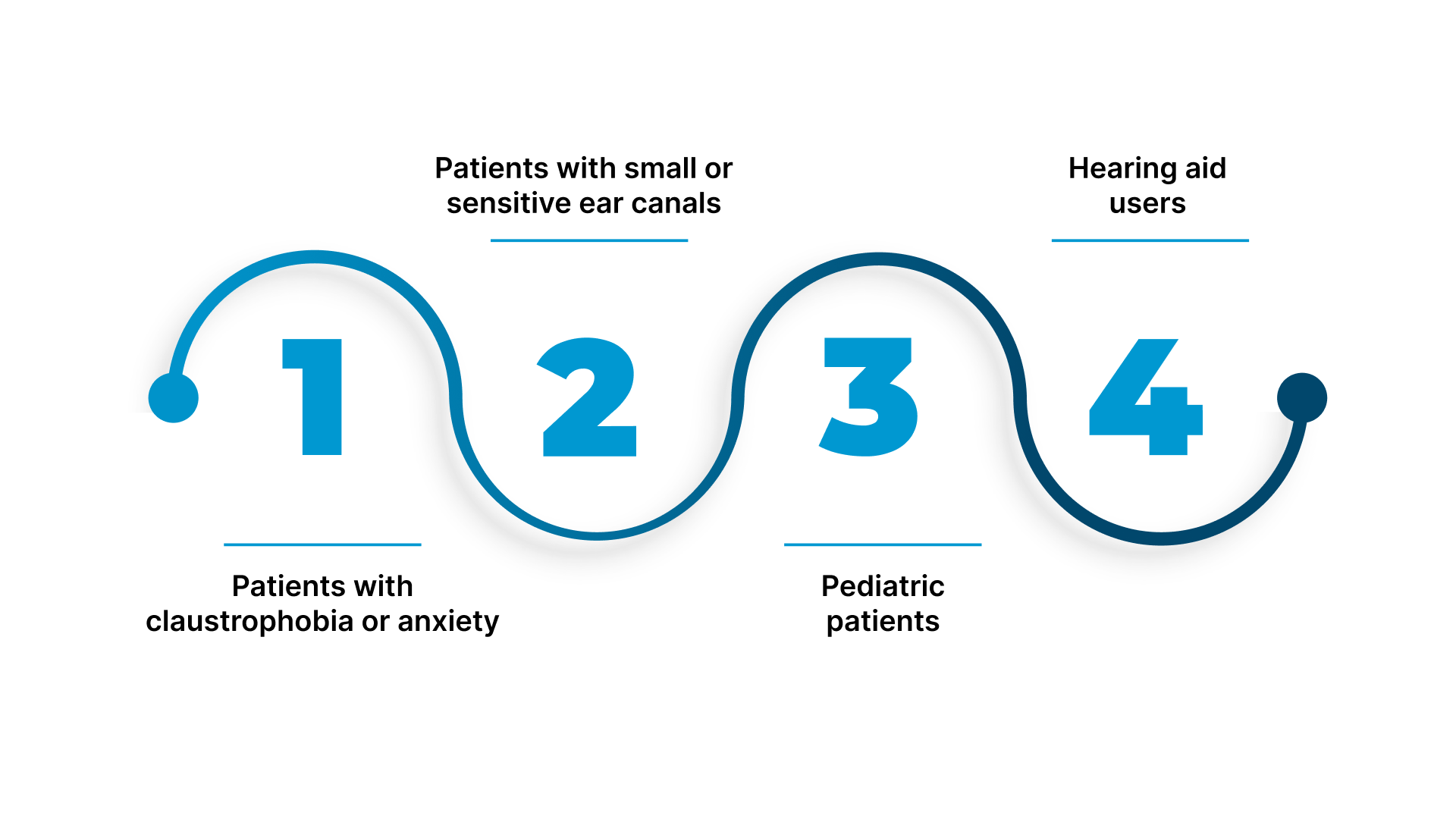
Patients with claustrophobia or anxiety: Loud, repetitive noise can intensify feelings of confinement. Properly fitted earplugs, often combined with headphones, can help reduce sensory overload and make the scan feel more manageable.
Patients with small or sensitive ear canals: Standard adult earplugs may feel uncomfortable or fail to stay in place. Smaller sizes or alternative earplug styles may be needed to maintain comfort without repeated adjustments.
Pediatric patients: Children typically require smaller earplugs and closer supervision. Comfort and tolerance are often prioritized to help them remain calm and still during the exam.
Hearing aid users: Hearing aids are removed before entering the MRI room. Earplugs must then be fitted directly, and patients may need reassurance if they rely on hearing aids for situational awareness.
These considerations do not usually change the overall approach to MRI hearing protection, but they do influence how earplugs are selected, fitted, and supported during the scan. Addressing these needs upfront helps reduce discomfort, interruptions, and incomplete exams.
For patients who struggle with anxiety or sensory sensitivity, additional MRI patient comfort products can help improve tolerance and scan completion.
What Patients Should Expect on the Day of Their MRI
For most patients, hearing protection is a routine part of MRI preparation and is handled by the imaging staff. Earplugs are typically provided before the scan begins and are fitted or checked as part of the setup process.
On the day of the exam, patients can generally expect the following:
Ear protection will be offered or required: Imaging centers routinely provide earplugs, and in some cases additional hearing protection such as MRI-safe headphones.
Instructions on how to wear the earplugs: Technologists may give brief verbal guidance to help ensure the earplugs are seated correctly before positioning begins.
Equipment may vary by facility: Some sites use earplugs only, while others combine earplugs with headphones. Availability can differ based on scanner type, coil configuration, and exam protocol.
Communication is encouraged: Patients should let the technologist know if the earplugs feel uncomfortable, fall out, or do not seem to reduce the noise adequately before the scan starts.
Most facilities prefer that patients use the hearing protection they provide. This helps ensure compatibility with MRI safety protocols and allows staff to support proper use. If a patient has concerns about comfort or fit, discussing them in advance or at check-in can help the technologist make appropriate adjustments.
Understanding what to expect helps reduce uncertainty and allows patients to focus on staying relaxed and still during the scan, which supports both comfort and image quality.
Bringing MRI Hearing Protection Together in Practice
In MRI environments, effective hearing protection depends on more than selecting a safe earplug. It requires consistency across rooms, compatibility with equipment, attention to patient comfort, and workflows that staff can execute reliably every day.
For imaging centers, earplugs work best when they are part of a coordinated approach to MRI sound management. This includes how hearing protection interacts with patient communication, comfort measures, and scanner-specific constraints. When these elements are aligned, patients are more comfortable, technologists spend less time troubleshooting, and exams are more likely to be completed efficiently.
Scan Sound supports healthcare environments with MRI-safe audio and hearing protection solutions designed for shared, high-noise clinical settings. By focusing on predictable performance and system-level integration, imaging centers can move beyond isolated accessories and toward a more consistent, patient-centered MRI experience.
Looking to standardize MRI hearing protection and audio? If you are evaluating or upgrading your MRI sound environment, explore options for integrated MRI audio solutions built for real-world clinical use.
FAQs
Q: What are the best earplugs for an MRI scan?
A: For most patients, the best earplugs for an MRI scan are the MRI-safe foam earplugs provided by the imaging facility. They are chosen because they are non-metallic, low profile for head coils, and reliable across many patients when inserted correctly.
Q: Are foam earplugs good enough for MRI noise?
A: Yes, when inserted properly, foam earplugs provide meaningful noise reduction for MRI scans and are widely used in clinical settings. Many facilities also pair earplugs with MRI-safe headphones for additional comfort and communication.
Q: What does “MRI-safe” mean for earplugs?
A: MRI-safe earplugs must be non-metallic, non-conductive, and low profile so they do not pose a risk near the magnet or interfere with scan-room equipment. The safest option is usually the ear protection supplied and approved by the facility.
Q: Can I bring my own earplugs to an MRI scan?
A: Some facilities allow it, but many prefer you use the earplugs they provide to ensure they meet MRI safety requirements and fit properly with coils and positioning. If you have comfort concerns, ask the facility before your appointment.
Q: Do higher NRR earplugs mean a quieter MRI experience?
A: Not always. NRR/SNR ratings are lab-based references. In real MRI use, fit and insertion technique matter more than the printed rating. A slightly lower-rated earplug that seals correctly can perform better than a higher-rated plug worn incorrectly.