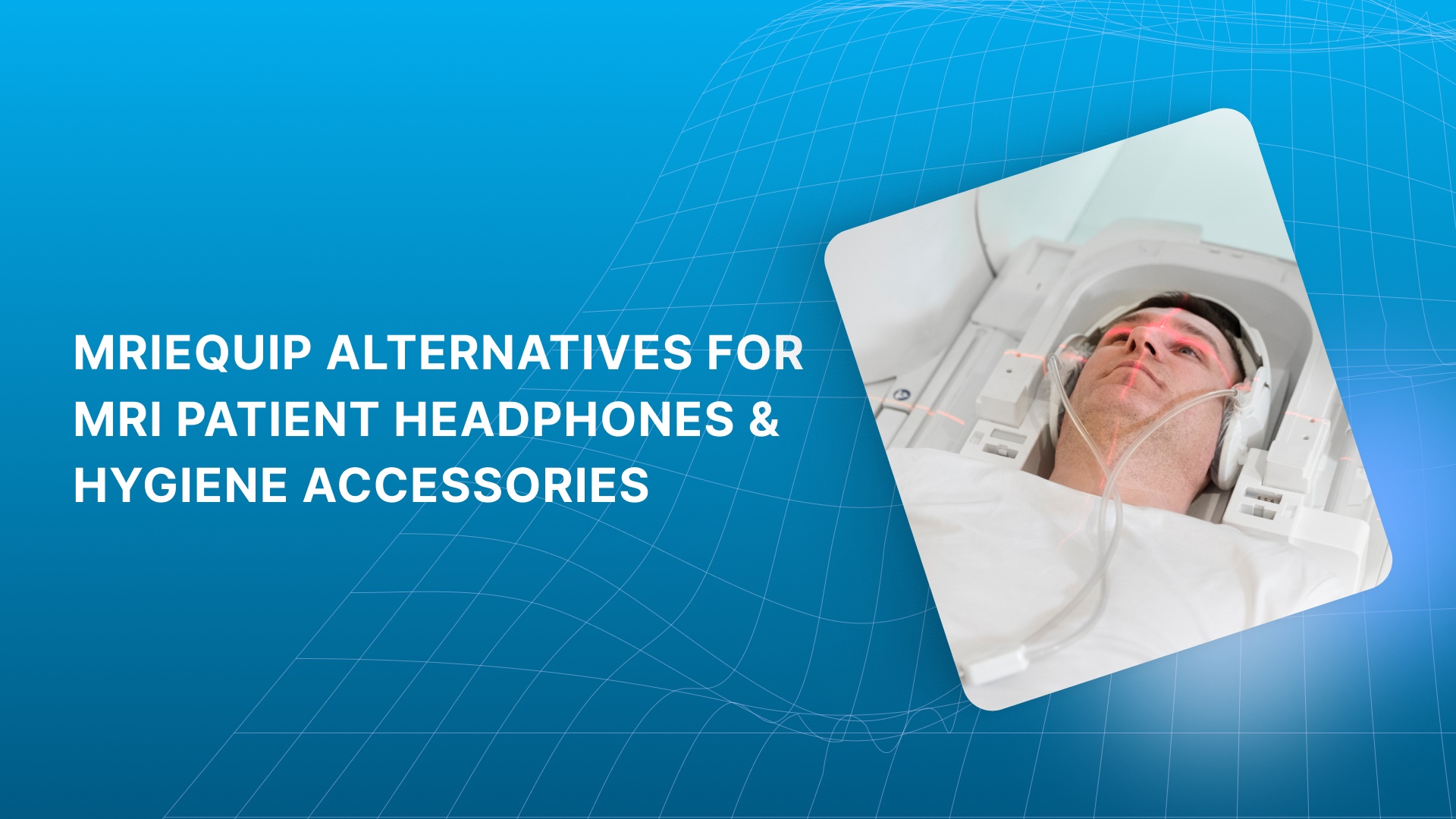
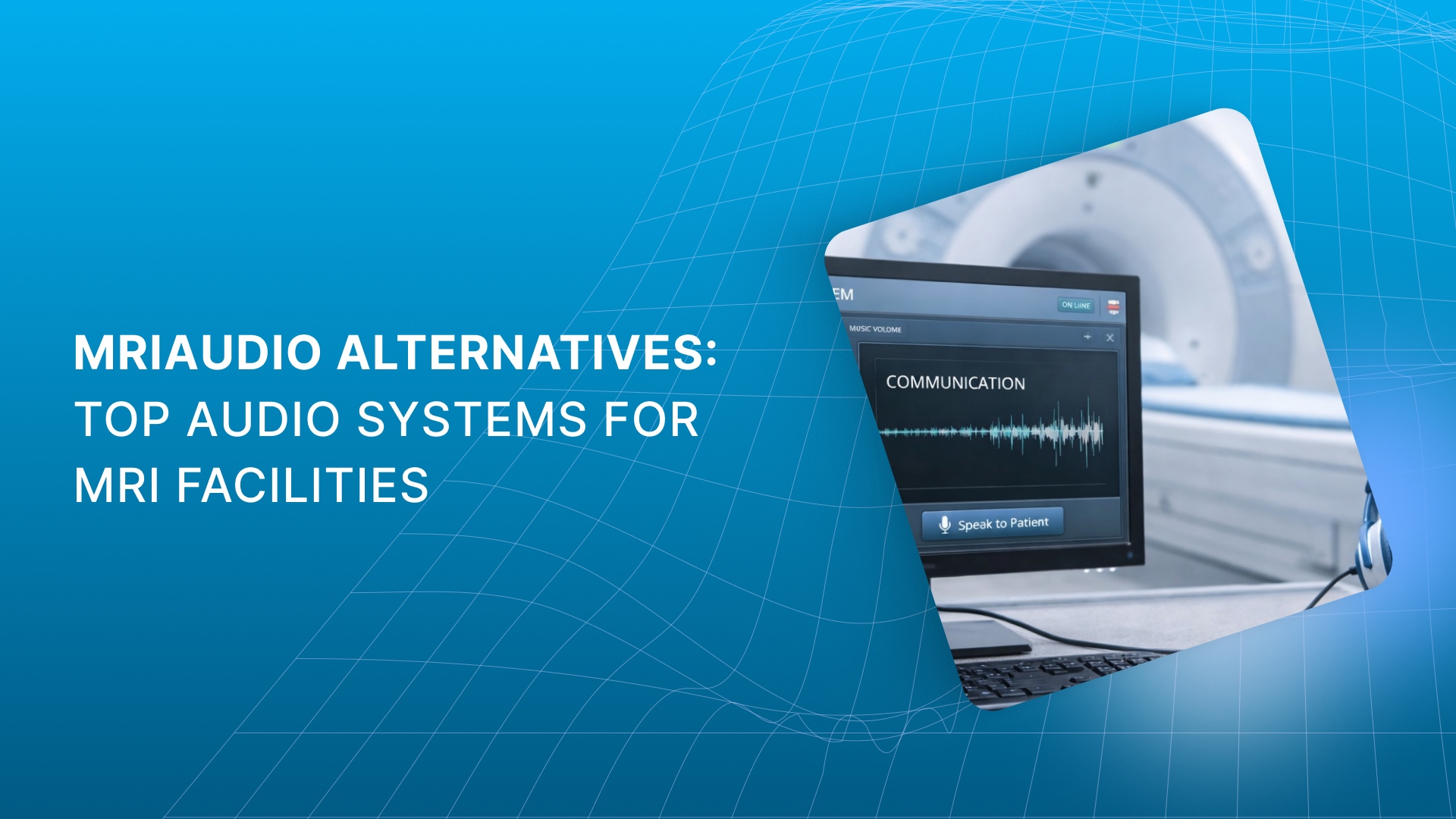
MRI exams are loud, confined, and often stressful for patients. Clear audio inside the scanner helps reduce anxiety, improves cooperation, and supports better scan outcomes. When patients can clearly hear instructions or calming audio, they are more likely to remain still, which helps reduce motion artifacts and repeat scans.
Many imaging centers rely on established MRI audio systems to meet these needs. Over time, however, facilities may begin evaluating MRIaudio alternatives as operational demands change. This is not always about replacing a system that no longer works. More often, it reflects evolving priorities around patient comfort, infection control, equipment compatibility, and long-term maintenance.
As imaging volumes increase and patient populations become more diverse, MRI audio solutions must support a wide range of use cases. Pediatric patients, anxious adults, older patients, and individuals with hearing challenges all place different demands on audio systems. At the same time, technologists and administrators must consider workflow efficiency, cleaning protocols, and system reliability.
This article explores the leading alternatives to traditional MRI audio systems and explains what factors matter most when evaluating them. The goal is to help imaging professionals make informed decisions that balance patient experience, clinical workflow, and practical ownership considerations.
Key Takeaways
MRIaudio alternatives are evaluated for practical reasons, not brand dissatisfaction. Imaging facilities typically explore alternatives to address patient comfort, hygiene compliance, compatibility, workflow efficiency, and long-term maintenance challenges.
Clear communication and patient comfort directly affect scan quality. Audio systems that improve speech intelligibility and reduce discomfort help patients remain still, lowering the risk of motion artifacts and repeat scans.
Hygiene and shared-use workflows are critical decision factors. MRI audio solutions must support efficient cleaning or disposable hygiene options to meet infection control standards without slowing room turnover.
Not all alternatives require full system replacement. Many facilities improve performance through modular upgrades such as MRI-safe headphones, cushions, or accessories while keeping their existing audio infrastructure.
The best MRI audio solution depends on patient population and workflow needs. Pediatric, anxious, geriatric, and hearing-impaired patients place different demands on audio systems, making flexibility and fit essential.
Incremental improvements often deliver the highest value. Targeted upgrades that address specific gaps in comfort, durability, or hygiene can enhance patient experience and operational efficiency without major disruption.
What MRI Facilities Expect From an MRI Audio System
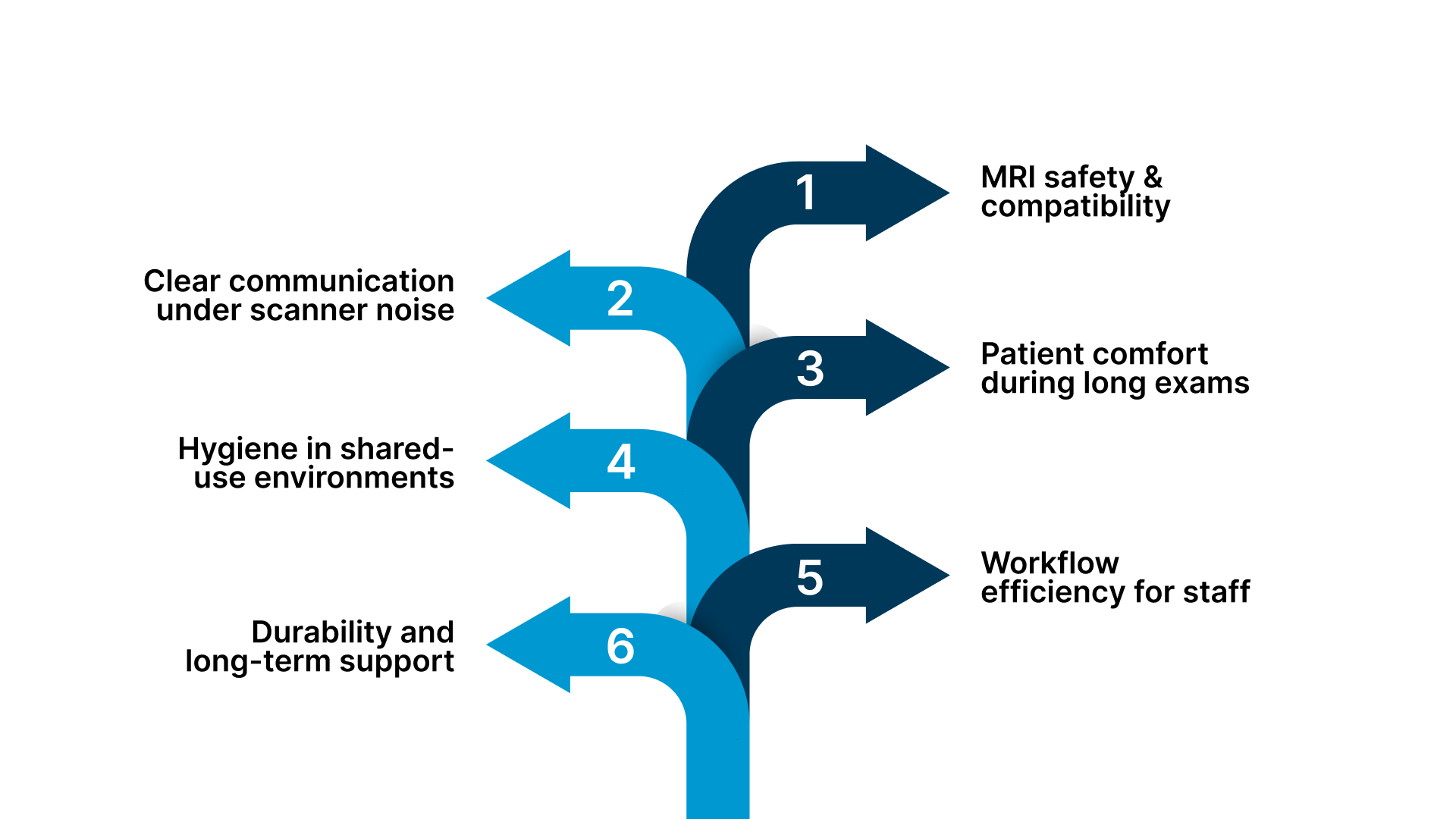
Before comparing MRIaudio alternatives, it is important to understand what imaging facilities fundamentally expect from any MRI audio system. These expectations go beyond basic sound delivery and reflect real-world clinical, operational, and compliance needs.
MRI safety and compatibility: Any audio system used in or near the MRI bore must be non-ferromagnetic and safe for high magnetic fields. Facilities expect consistent performance without introducing safety risks, image artifacts, or interference with scanner operation. Compatibility across different scanner models and bore configurations is also a baseline requirement.
Clear communication under scanner noise: MRI scanners generate intense gradient noise that can overwhelm poorly designed audio systems. Facilities expect patients to clearly hear technologist instructions, not just background music. Speech intelligibility is critical for patient cooperation, especially during breath-hold or motion-sensitive sequences.
Patient comfort during long exams: Audio components must remain comfortable throughout lengthy scans. Poor fit, excessive clamping force, or rigid materials can increase patient anxiety and movement. Facilities look for designs that accommodate a wide range of head sizes and patient sensitivities.
Hygiene in shared-use environments: MRI headphones are used by multiple patients every day. Facilities must follow strict infection control protocols, which means audio systems should be easy to clean or compatible with disposable hygiene solutions. Complicated cleaning processes slow room turnover and increase compliance risk.
Workflow efficiency for staff: Technologists need audio systems that are simple to set up, reliable during scans, and quick to reset between patients. Frequent adjustments, fragile components, or long replacement delays can disrupt daily operations.
Durability and long-term support: MRI audio equipment is a long-term investment. Facilities expect durable construction, access to replacement parts, and ongoing vendor support. Systems that require full replacement due to minor wear can become costly over time.
Understanding these baseline expectations makes it easier to evaluate MRIaudio alternatives objectively. The next section breaks down the main categories of MRI audio systems available today and how they differ in design and use.
See how MRI-safe audio components are designed to meet real clinical requirements.
Common Categories of MRIaudio Alternatives
MRIaudio alternatives generally fall into a few broad system categories. Understanding these categories helps facilities compare options based on design approach, clinical fit, and operational impact rather than brand names alone.
Pneumatic MRI audio systems: Pneumatic systems use air tubes to deliver sound from an external audio source to the patient inside the MRI bore. Because no electronic components are placed near the magnet, these systems are widely used in MRI environments. They are valued for safety and reliability but can vary significantly in sound clarity, comfort, and ease of cleaning depending on headphone design and tubing quality.
Wired MRI-safe headphone systems: These systems use specially designed, non-ferromagnetic wiring and components that are safe for MRI use. Wired MRI headphones often provide improved sound clarity and speech intelligibility compared to basic pneumatic designs. Performance depends heavily on shielding, cable durability, and how well the headphones integrate with the scanner’s communication system.
In-bore speaker and communication systems: Some MRI setups rely on integrated speaker systems within the bore combined with patient intercoms. These solutions focus on verbal communication rather than immersive audio. While they reduce the need for headphones, they may not provide sufficient noise reduction or comfort for anxious patients or long exams.
Hybrid audio and communication systems: Hybrid systems combine patient audio, technologist communication, and sometimes entertainment options. These setups aim to balance comfort and instruction delivery but can introduce complexity in setup, maintenance, and compatibility across scanner models.
Accessory-based and modular alternatives: Rather than replacing an entire MRI audio system, some facilities improve performance through modular components such as upgraded MRI-safe headphones, replacement cushions, or disposable hygiene covers. This approach allows centers to address comfort, hygiene, or durability gaps without changing their core scanner infrastructure.
Each category offers different advantages and limitations. The right choice depends on patient needs, workflow priorities, and how much flexibility a facility requires. The next section looks at how MRIaudio-style systems compare at a high level to these alternative approaches.
Compare MRI headphone systems and accessories by configuration and use case.
MRIaudio vs Other MRI Audio System Approaches
When facilities compare MRIaudio alternatives, they are often weighing a familiar, integrated system against newer or more modular approaches. Understanding how MRIaudio-style systems differ from other MRI audio options helps clarify what is gained or limited with each approach.
MRIaudio systems are commonly chosen for their tight integration with MRI scanners and established presence in imaging environments. Facilities value their familiarity, predictable setup, and ability to deliver music and communication through a single system. For many centers, this consistency supports smooth daily operations.
However, as imaging demands evolve, some limitations become more noticeable:
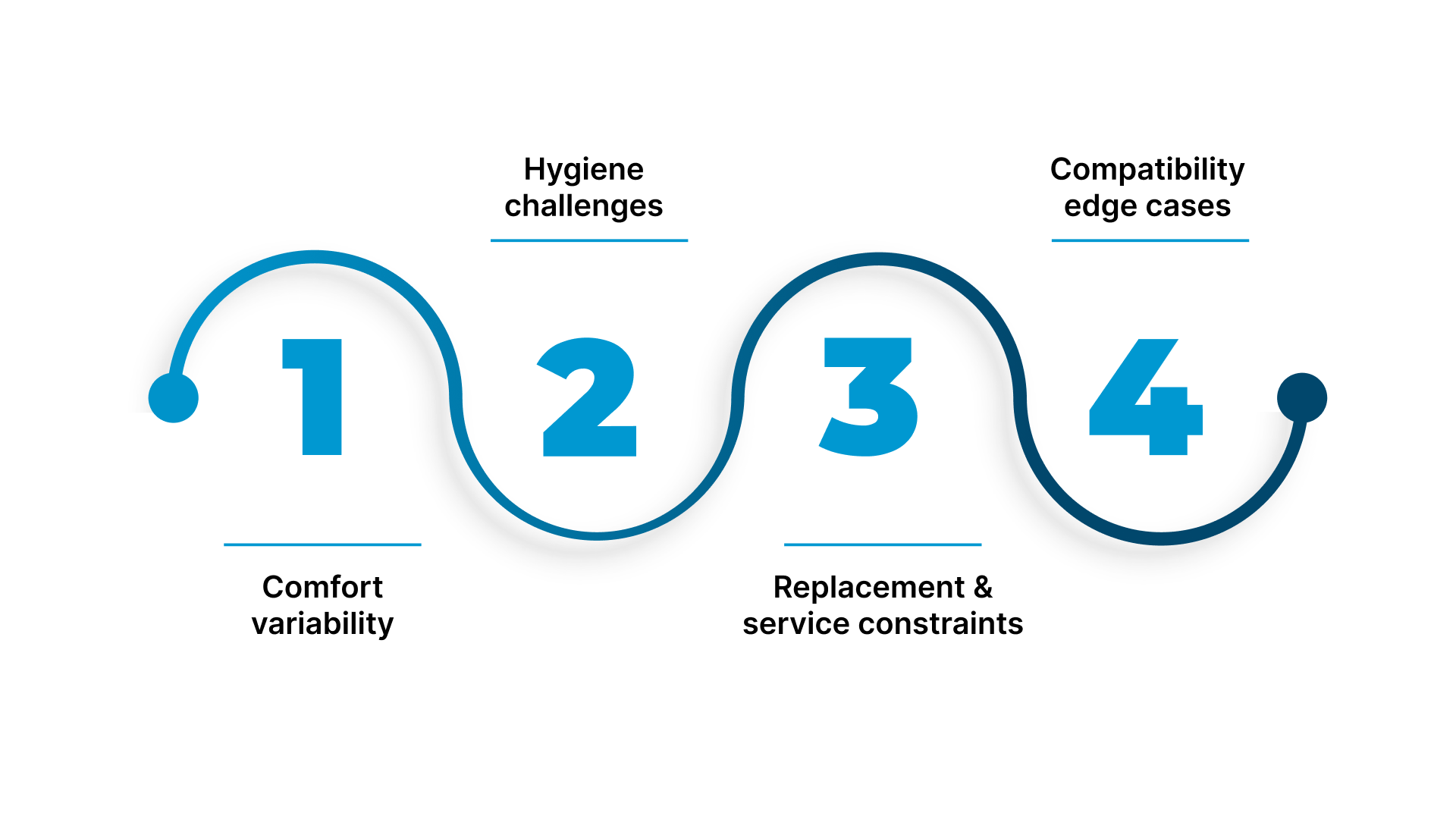
Comfort variability: Integrated systems often rely on standardized headphone designs that may not fit all patients equally well, especially during long exams or with pediatric and sensitive populations.
Hygiene challenges: Cleaning reusable headphones between patients can add time and complexity, particularly in high-volume facilities with strict infection control protocols.
Replacement and service constraints: Facilities may experience delays or higher costs when replacing worn components that are not designed to be modular or easily swapped.
Compatibility edge cases: While designed for broad use, some integrated systems may not adapt easily across different scanner models, room layouts, or workflow changes.
In contrast, other MRI audio system approaches, including modular headphone solutions and accessory-based upgrades, offer more flexibility. These alternatives allow facilities to address specific issues such as comfort, hygiene, or durability without fully replacing an existing audio infrastructure.
Review modular MRI audio components that integrate with existing systems.
Key Factors to Compare When Evaluating MRIaudio Alternatives
Once facilities understand the different categories of MRI audio systems, the next step is evaluating options using criteria that reflect real clinical and operational needs. Comparing MRIaudio alternatives effectively requires looking beyond brand names and focusing on performance, usability, and long-term impact.
Audio clarity and speech intelligibility: Volume alone is not enough in an MRI environment. Facilities should evaluate how clearly patients can understand spoken instructions over scanner noise. Systems that emphasize speech intelligibility help reduce miscommunication, patient movement, and repeat scans.
Patient comfort and fit: Comfort affects both patient experience and scan quality. Headphones should accommodate different head sizes and sensitivities without excessive pressure. Poor fit can increase anxiety, particularly during longer exams or with pediatric, geriatric, or claustrophobic patients.
Hygiene and infection control workflow: Shared-use MRI audio equipment must align with infection control standards. Facilities should consider how easily components can be cleaned, whether disposable covers are compatible, and how these processes affect room turnover time.
Durability and component replacement: MRI audio systems experience daily wear. Facilities benefit from solutions that allow individual components, such as cushions or cables, to be replaced without discarding the entire system. This reduces downtime and long-term costs.
Compatibility with existing MRI infrastructure: Any alternative should integrate smoothly with current MRI scanners and communication systems. Compatibility issues can create workflow disruptions and require additional training or modifications.
Impact on technologist workflow: Ease of setup, adjustment, and reset between patients matters. Systems that are intuitive and reliable support faster turnover and reduce staff frustration.
Evaluating MRIaudio alternatives through these factors helps facilities identify solutions that match their specific priorities. The next section examines where many MRI audio systems tend to fall short and why facilities begin looking for alternatives in the first place.
Suggested Read: Why are Disposable Covers Used on Headphones and Headsets?
Where Many MRI Audio Systems Fall Short
Even well-established MRI audio systems can reveal limitations over time, especially as patient expectations, compliance requirements, and imaging volumes increase. These gaps often prompt facilities to explore MRIaudio alternatives that better match day-to-day realities.
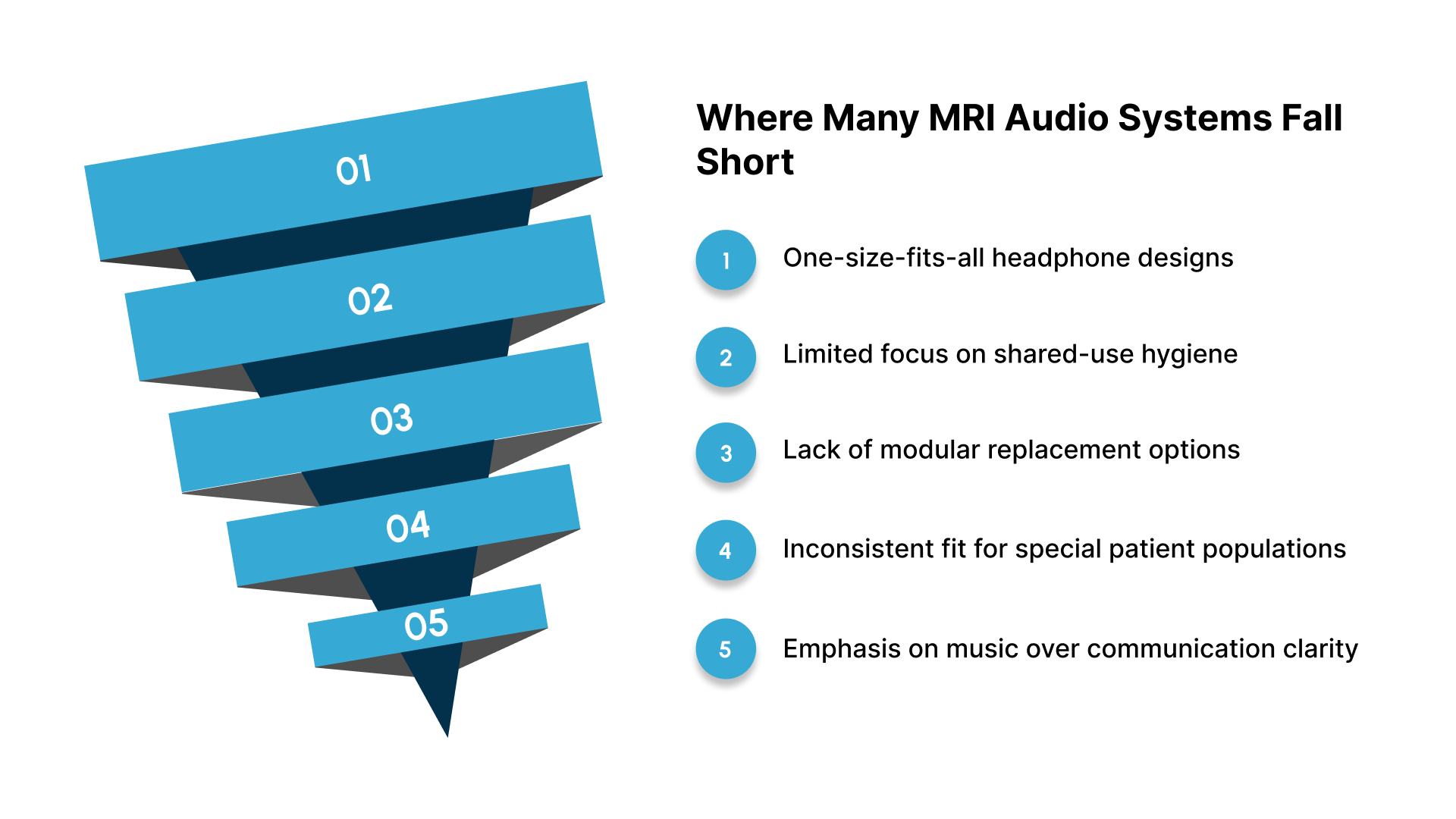
One-size-fits-all headphone designs: Many MRI audio systems rely on a single headphone style intended to work for every patient. In practice, head size, sensitivity, and tolerance vary widely. Rigid designs or limited adjustability can lead to discomfort, movement during scans, and increased patient anxiety.
Limited focus on shared-use hygiene: In busy imaging environments, headphones are used by multiple patients throughout the day. Systems that depend solely on cleaning reusable surfaces can slow turnover and increase compliance risk. Facilities increasingly look for solutions that support disposable hygiene options without degrading audio quality.
Lack of modular replacement options: When cushions, cables, or connectors wear out, some systems require full unit replacement or long service delays. This approach increases downtime and ownership costs, especially in high-volume centers.
Inconsistent fit for special patient populations: Pediatric patients, older adults, and individuals with hearing challenges often require more thoughtful audio design. Systems that prioritize basic sound delivery over comfort and intelligibility may not adequately support these groups.
Emphasis on music over communication clarity: While music can help reduce anxiety, clear communication remains essential during MRI exams. Some systems prioritize entertainment features while underperforming in speech intelligibility, which can affect patient cooperation and scan efficiency.
Recognizing these common shortcomings helps clarify what to look for in MRIaudio alternatives. The next section explains how Scan Sound fits into the MRI audio ecosystem and where it addresses many of these gaps without requiring full system replacement.
Address common MRI audio pain points with replaceable and hygiene-friendly components.
How Scan Sound Fits Into the MRI Audio Ecosystem
Scan Sound approaches MRI audio from a different angle than full console-based systems. Rather than replacing an MRI audio platform outright, Scan Sound focuses on solving the practical gaps facilities encounter over time, especially around comfort, hygiene, durability, and adaptability.
With decades of experience in engineered audio solutions for healthcare and institutional environments, Scan Sound designs MRI-safe headphones and accessories that integrate into existing MRI setups. This allows facilities to improve patient experience and operational efficiency without changing scanners or core communication systems.
Key ways Scan Sound fits into the MRI audio ecosystem include:
Comfort-first headphone design: Scan Sound MRI-safe headphones are designed with patient comfort as a priority. Softer materials, better fit consistency, and thoughtful padding help reduce pressure and discomfort during long exams. Improved comfort supports patient stillness, which directly impacts scan quality.
Hygiene-focused shared-use solutions: Infection control is a growing concern in imaging environments. Scan Sound supports shared-use MRI audio with disposable headphone covers and replaceable components that simplify cleaning workflows and help facilities maintain compliance without slowing room turnover.
Modular and replaceable components: Rather than treating MRI headphones as disposable equipment, Scan Sound designs components such as cushions and accessories to be replaced individually. This modular approach reduces downtime, extends product life, and lowers long-term ownership costs.
Compatibility with existing MRI systems: Scan Sound products are designed to work alongside established MRI audio and communication systems. Facilities can address comfort, hygiene, or durability issues without retraining staff or reconfiguring scanner rooms.
Support for diverse patient populations: By focusing on fit, clarity, and comfort, Scan Sound solutions are well suited for pediatric patients, anxious adults, older patients, and individuals with hearing challenges. This makes them a practical alternative or supplement when standard MRI audio systems fall short.
In this way, Scan Sound functions as a flexible MRIaudio alternative, not by duplicating full audio consoles, but by strengthening the parts of the MRI audio experience that directly affect patients and daily workflow.
Discover MRI-safe audio solutions built for long-term clinical use.
Use-Case Scenarios: When Scan Sound Is a Strong MRIaudio Alternative
Scan Sound is often considered when facilities are not looking to replace an entire MRI audio system but need targeted improvements where existing solutions fall short. The following scenarios highlight when Scan Sound functions as a practical MRIaudio alternative or complement.
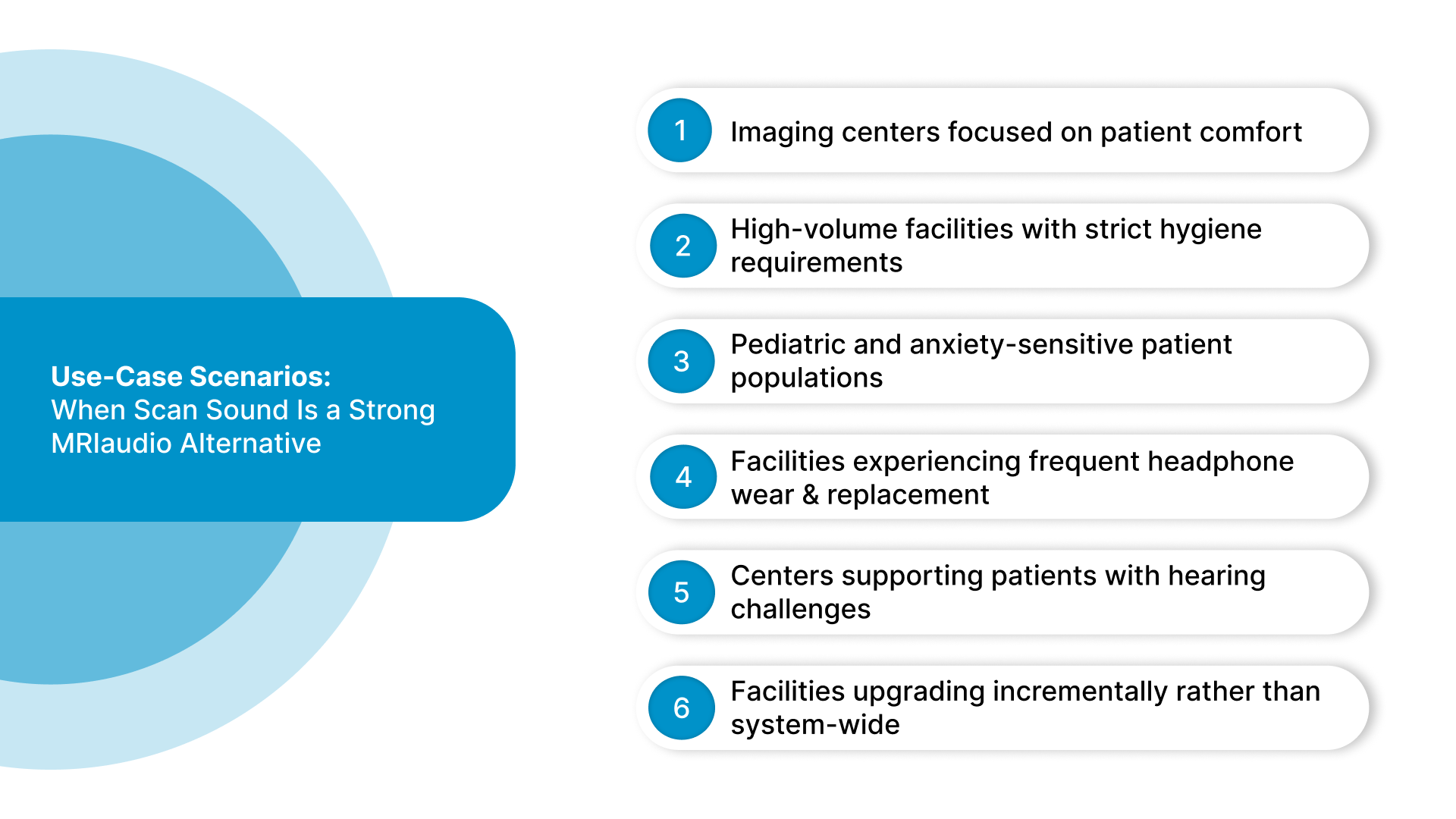
Imaging centers focused on patient comfort: Facilities that see frequent patient movement, scan interruptions, or anxiety-related issues often trace the problem back to discomfort. Upgrading to more comfortable MRI-safe headphones and cushions can significantly improve patient tolerance during long exams without changing the core audio system.
High-volume facilities with strict hygiene requirements: Centers that scan many patients per day face constant pressure to maintain infection control while keeping turnaround times low. Disposable headphone covers and replaceable components allow staff to reset rooms quickly while maintaining consistent hygiene standards.
Pediatric and anxiety-sensitive patient populations: Children and anxious adults are more sensitive to pressure, noise, and poor fit. Facilities serving these populations benefit from audio accessories designed to feel less restrictive while still delivering clear communication during scans.
Facilities experiencing frequent headphone wear and replacement: When cushions degrade or cables fail, full system replacement can be costly and disruptive. Modular components allow facilities to address wear issues quickly and extend the life of their MRI audio setup.
Centers supporting patients with hearing challenges: Clear instruction delivery matters most for patients with hearing loss or processing difficulties. Improving headphone fit and audio clarity can make communication more reliable without increasing volume levels.
Facilities upgrading incrementally rather than system-wide: Not every center is ready or able to replace an MRI audio platform. Scan Sound fits well in phased upgrades where comfort, hygiene, or durability improvements are addressed first while existing infrastructure remains in place.
These scenarios show how Scan Sound supports facilities looking for flexibility rather than a full system overhaul. The next section helps imaging professionals decide when it makes sense to stay with an existing MRIaudio system and when an alternative approach is the better choice.
Find MRI audio products matched to your patient population and workflow.
How to Decide: Stay With MRIaudio or Switch to an Alternative
Deciding whether to continue with an existing MRIaudio system or move to an alternative depends on how well the current setup supports patient experience and daily operations. There is no universal answer, but a structured evaluation can make the decision clearer.
When staying with MRIaudio may make sense
Facilities that are satisfied with patient comfort, communication clarity, and workflow efficiency may not need a full system change. If the existing system integrates well with current scanners, meets hygiene requirements, and replacement support is reliable, staying with MRIaudio can be a practical choice.
Suggested Read: Safely Share Headphones by using Disposable Covers
When an alternative approach may be better
Exploring MRIaudio alternatives often makes sense when facilities experience recurring issues that cannot be resolved through minor adjustments. These may include persistent patient discomfort, challenges meeting infection control protocols, frequent component failures, or limitations in supporting diverse patient populations.
Questions facilities should ask before switching
Before making a change, imaging teams should evaluate vendors and solutions using practical questions:
Does this solution integrate with our existing MRI scanners and communication systems?
How does it improve patient comfort during long or noisy exams?
What hygiene options are available for shared use?
Are components modular and easy to replace?
How will this change affect technologist workflow and room turnover?
What long-term support and replacement availability does the vendor offer?
Considering incremental upgrades
In many cases, the decision is not strictly between keeping or replacing MRIaudio. Facilities may benefit from improving specific elements such as headphones, cushions, or hygiene accessories while maintaining their current audio platform. This incremental approach reduces disruption while addressing the most pressing gaps.
By evaluating MRIaudio alternatives through these questions, facilities can make decisions that align with patient needs, operational efficiency, and long-term ownership considerations. The final section summarizes these insights and outlines practical next steps.
Review modular MRI audio options that support incremental upgrades.
Conclusion
Searching for MRIaudio alternatives is rarely about finding a universally better system. It is about identifying what best supports your patients, staff, and workflow today. Comfort, communication clarity, hygiene, and long-term usability often matter more than brand familiarity alone.
For some facilities, an existing MRIaudio system may continue to meet core needs with minimal adjustment. For others, recurring challenges such as patient discomfort, cleaning inefficiencies, or frequent component replacement signal the need for a different approach. In many cases, the most effective solution is not a full system replacement, but a targeted upgrade that addresses specific gaps.
This is where Scan Sound fits naturally into the MRI audio landscape. By focusing on MRI-safe headphones, comfort-driven design, hygiene-friendly accessories, and modular replacement components, Scan Sound allows imaging centers to improve patient experience and operational efficiency without disrupting existing MRI infrastructure.
The right MRI audio solution should support clear communication, help patients remain calm and still, and integrate smoothly into daily clinical routines. Evaluating alternatives through these priorities leads to decisions that improve scan quality, staff efficiency, and patient satisfaction over time.
If you are considering MRIaudio alternatives, start by identifying where your current system falls short, then look for solutions that address those needs directly. Thoughtful, incremental improvements often deliver the most practical and lasting results. Need help selecting the right MRI audio components for your facility? Explore Scan Sound’s MRI-safe solutions or request guidance from our team.
FAQs
Q: What does “MRIaudio alternatives” usually mean?
A: MRIaudio alternatives typically refer to other MRI-safe audio systems, headphones, or accessories used for patient communication and comfort during MRI scans. Facilities usually explore alternatives to address comfort, hygiene, compatibility, or maintenance needs rather than to replace a working system without cause.
Q: Why do imaging centers look for MRIaudio alternatives?
A: Imaging centers often evaluate MRIaudio alternatives due to patient comfort concerns, infection-control requirements, workflow efficiency issues, or evolving scanner compatibility needs. The search is usually driven by operational changes rather than dissatisfaction with audio quality alone.
Q: Do MRIaudio alternatives require replacing the entire audio system?
A: No. Many facilities improve performance by upgrading MRI-safe headphones, cushions, or hygiene accessories while keeping their existing MRI audio and communication infrastructure. Full system replacement is usually considered only during major upgrades or renovations.
Q: What should facilities compare when evaluating MRIaudio alternatives?
A: Key comparison factors include speech intelligibility during scans, patient comfort and fit, hygiene support for shared use, durability of components, compatibility with existing scanners, and impact on technologist workflow.
Q: Are MRIaudio alternatives compatible with all MRI scanners?
A: Compatibility varies. Some MRIaudio alternatives are designed to work across multiple MRI manufacturers, while others are system-specific. Facilities should confirm scanner model, connection type, and room setup before selecting an alternative.