In many listening situations, wearing two earbuds is not practical or even safe. Healthcare professionals need to hear patients and equipment. Aviation and laboratory staff must stay aware of their surroundings. Individuals with hearing in only one ear often struggle with audio that was never designed for one-ear use.
Yet most headphones assume that everyone listens the same way. Standard stereo earbuds split sound between left and right channels, which can cause important information to be missed when only one ear is used. This turns a simple listening task into a frustrating experience, especially in environments where clarity and awareness matter.
Single stereo earbuds were created to solve this exact problem. Instead of forcing users to adapt consumer audio products, they deliver complete stereo sound through one ear while leaving the other ear open. This guide explains the benefits of single stereo earbuds, how they work, and who they are best suited for, so you can determine whether they fit your listening needs.
Key Takeaways
Single stereo earbud benefits include delivering complete stereo audio through one ear, preventing lost speech, alerts, or audio details common with standard earbuds.
One-ear listening improves safety and situational awareness, making single stereo earbuds well suited for healthcare, aviation, laboratories, monitoring roles, and other professional environments.
Single stereo earbuds support accessibility needs, especially for individuals with single-sided hearing loss, by ensuring all audio reaches the hearing ear without added strain.
Properly engineered single stereo earbuds help reduce listening fatigue during long shifts by maintaining balanced sound without requiring higher volume levels.
Sound quality is preserved through intentional stereo channel summing, which maintains clarity and consistency across professional and medical audio equipment.
Single stereo earbuds offer hygiene and shared-use advantages, including easier cleaning, fewer contact points, and compatibility with disposable covers and replaceable accessories.
Choosing the right single stereo earbud depends on use case, device compatibility, fit, hygiene requirements, and whether wired or wireless operation is needed.
Single stereo earbuds are not ideal for every situation and may not be suitable where spatial stereo imaging, full isolation, or mandated dual-ear equipment is required.
What Is a Single Stereo Earbud?
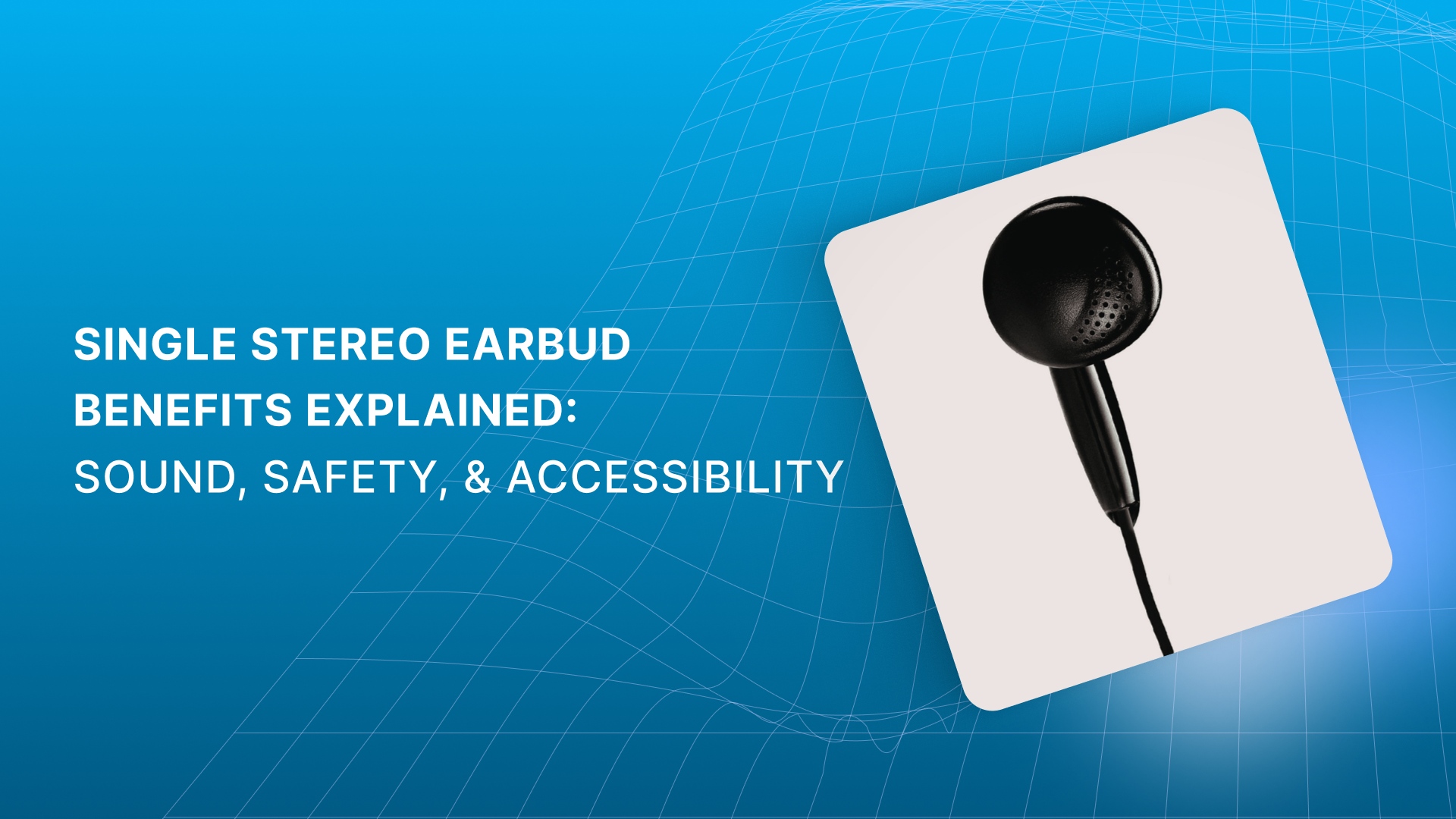
A single stereo earbud is designed to deliver the entire audio signal to one ear. Unlike standard earbuds that split left and right audio between two earpieces, a single stereo earbud intentionally combines both channels so no information is lost when listening with only one ear.
This distinction is important in real-world use. When someone removes one earbud from a traditional stereo pair, the audio experience often breaks down:
Parts of speech or alerts may be routed to the unused channel
Volume and clarity can become uneven
Critical sounds may disappear entirely
A single stereo earbud avoids these issues by summing both left and right channels into one balanced signal.
It is also important to distinguish single stereo earbuds from mono earbuds:
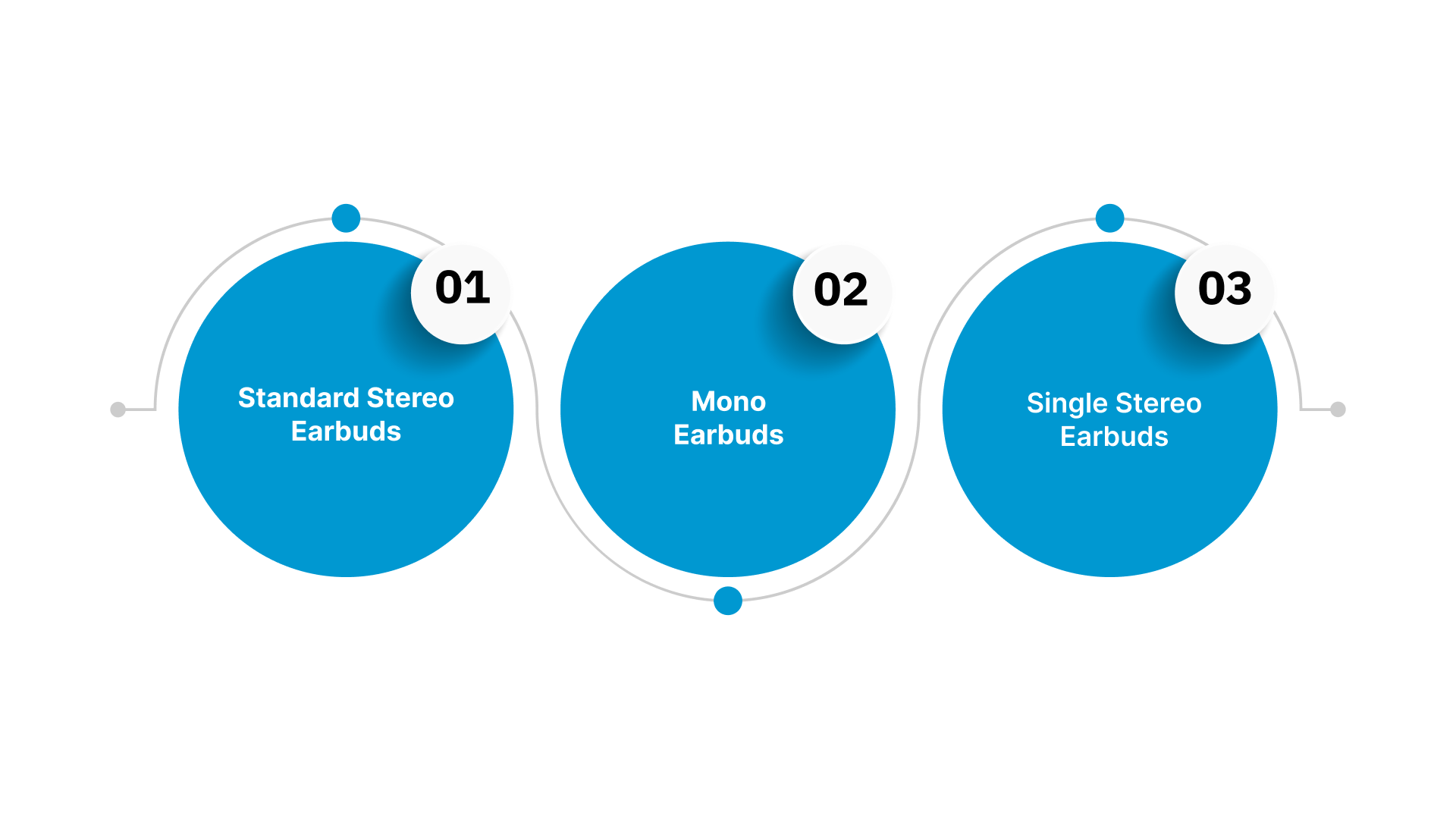
Standard stereo earbuds split audio across two ears and are not designed for one-ear use
Mono earbuds output a single channel and are typically optimized for basic voice only
Single stereo earbuds preserve full stereo content in one ear without sacrificing clarity
Because of this design, a true single stereo earbud works well in environments where one-ear listening is required. This includes professional settings, clinical workflows, and accessibility-focused use cases where reliable, complete audio matters more than immersive sound.
Manufacturers that specialize in professional one-ear audio, such as Scan Sound, design these solutions specifically for environments where clarity and awareness matter.
Suggested Read: Why are Disposable Covers Used on Headphones and Headsets?
Core Benefits of Using a Single Stereo Earbud
Single stereo earbuds are not a convenience shortcut. They are a functional solution designed for specific listening conditions where two-ear audio creates problems rather than benefits. Below are the core advantages that make them the right choice in professional, clinical, and accessibility-focused environments.
Situational Awareness and Safety
Keeping one ear open is often a requirement, not a preference. Single stereo earbuds support this by design.
Allows users to hear alarms, announcements, and nearby conversations
Reduces risk in clinical, aviation, lab, and monitoring environments
Supports compliance with workplace safety policies that discourage dual-ear isolation
Accessibility for Single-Sided Hearing Loss
For individuals with hearing in only one ear, traditional stereo audio can be incomplete or confusing.
Delivers both left and right audio content to the hearing ear
Prevents loss of speech, cues, or alerts mixed to one channel
Reduces listening effort and mental fatigue over time
Reduced Fatigue During Long Use
Listening with one ear can be more sustainable during long shifts when the audio signal is properly engineered.
Avoids unnecessary auditory overload
Supports extended wear in professional workflows
Helps maintain focus without sensory strain
Practical Convenience Without Audio Compromise
Single stereo earbuds simplify daily use while maintaining reliable sound delivery.
No unused second earbud to manage, store, or clean
Consistent audio balance without manual device settings
Designed for environments where reliability matters more than immersion
Looking for a solution that supports clear, reliable listening in real-world environments? Scan Sound offers stereo headphones and stereo-to-mono headsets designed for clarity, comfort, and consistent performance in professional and clinical settings. Explore options built to match your equipment, workflow, and listening needs.
Sound Quality: How One Ear Can Still Deliver Full Audio
A common concern with one-ear listening is whether sound quality is compromised. With a properly designed single stereo earbud, the answer is no. The difference lies in how the audio signal is handled before it reaches the ear.
Most modern audio sources are mixed in stereo, with information intentionally placed in the left and right channels. When one channel is removed, important details can be lost. Single stereo earbuds address this at the signal level.
How Stereo Audio Is Preserved
A true single stereo earbud combines both channels into one cohesive signal before playback.
Left and right audio channels are summed together intentionally
Speech, alerts, and background sounds remain present and balanced
Volume levels stay consistent without manual adjustment
This process ensures that all parts of the original audio are delivered to the listening ear.
What Happens Without Proper Summing
When one earbud from a standard stereo pair is removed, the result is often incomplete audio.
Voices or alerts mixed to the missing channel may be faint or absent
Audio balance can feel uneven or distracting
Users may increase volume unnecessarily to compensate
Over time, this can lead to frustration, listening fatigue, or missed information.
Why Engineering Matters
Sound quality in a single stereo earbud is not about enhanced bass or entertainment-focused tuning. It is about clarity, intelligibility, and consistency.
Clear speech reproduction for communication and instructions
Reliable delivery of alerts and prompts
Predictable performance across different devices and environments
Ensuring proper stereo-to-single-ear signal handling often requires more than standard earbuds, especially with professional or medical equipment.
Must Read: Sharing of Headphones and Headsets Created a Need for Disposable Covers
Hygiene and Shared-Use Advantages
In many professional and clinical environments, audio equipment is used by more than one person. In these settings, hygiene is not optional. Single stereo earbuds offer practical advantages that make them easier to manage, clean, and maintain compared to traditional two-ear designs.

Lower Risk in Shared Environments
Using only one earbud reduces the surface area that comes into contact with the user.
Fewer contact points compared to dual-ear headsets
Reduced opportunity for cross-contamination
Easier compliance with internal hygiene protocols
This is especially relevant in healthcare, imaging, labs, and other controlled environments.
Easier Cleaning and Replacement
Single stereo earbuds simplify maintenance workflows.
Faster wipe-downs between users
Fewer components to inspect or replace
More predictable replacement cycles in institutional settings
For facilities managing multiple headsets, this can translate to time savings and improved consistency.
Better Fit for Hygiene-Sensitive Workflows
Some environments require audio solutions that support frequent handoffs or short-term use.
Works well with disposable covers or designated single-user assignment
Reduces handling compared to managing two earpieces
Supports cleaner storage and distribution processes
By design, single stereo earbuds align well with shared-use and hygiene-conscious settings where audio clarity must be balanced with safety and cleanliness.
Who Benefits Most from Single Stereo Earbuds?
Single stereo earbuds are designed for specific users and environments where one-ear listening is necessary or more effective. This section helps readers quickly determine whether this type of earbud fits their situation.
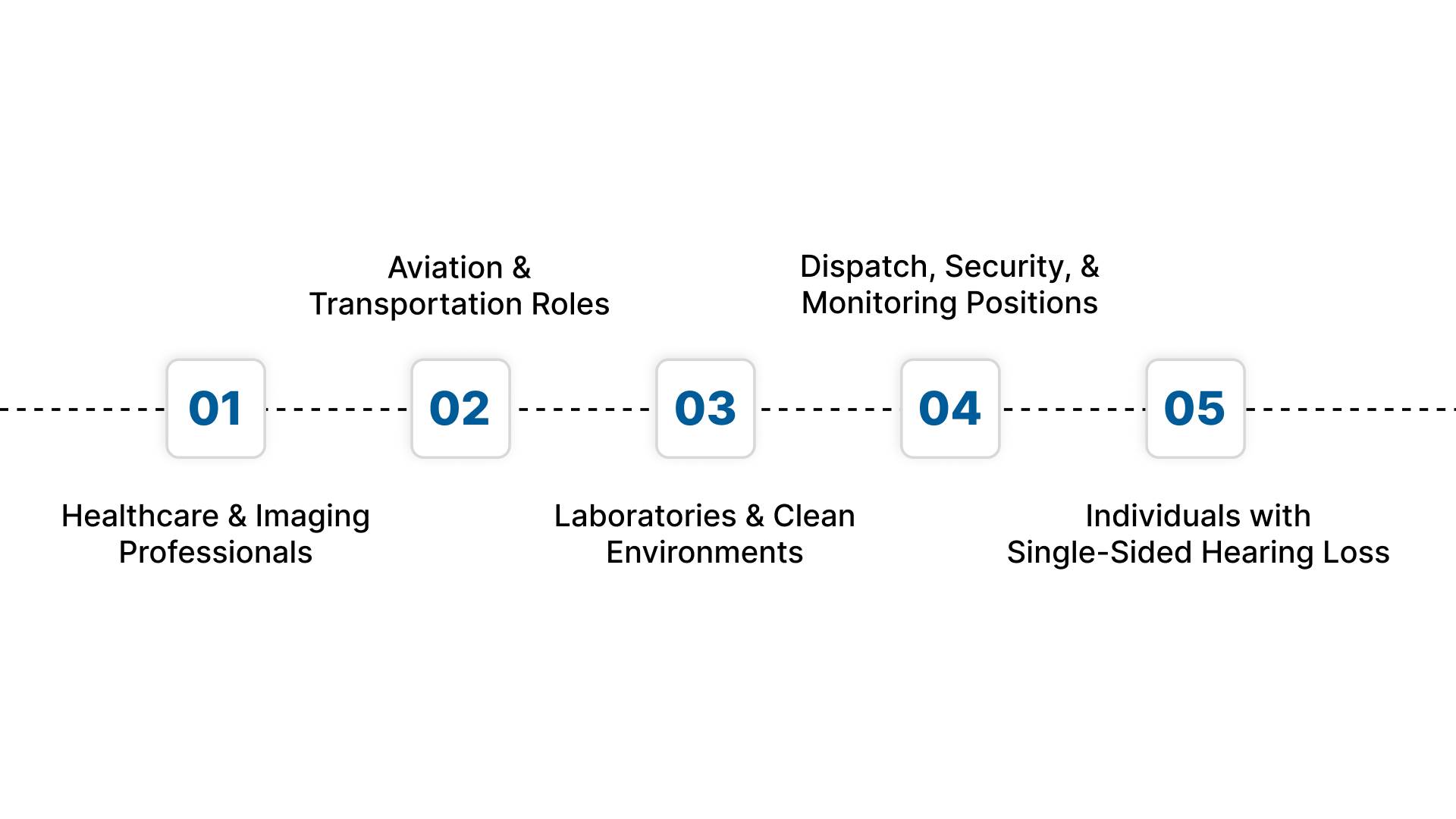
Healthcare and Imaging Professionals
Clinical environments often require constant awareness while still receiving clear audio instructions.
Ability to hear patients, alarms, and staff communication
Suitable for imaging, diagnostic, and procedural workflows
Supports hygiene-conscious and shared-use settings
Aviation and Transportation Roles
Situational awareness is critical in aviation, transit, and related fields.
Keeps one ear open for ambient and safety sounds
Maintains clear audio for communications and alerts
Reduces risk associated with dual-ear isolation
Laboratories and Clean Environments
Labs and controlled spaces benefit from simplified, low-contact audio solutions.
Easier cleaning and maintenance
Less equipment to manage during shifts
Compatible with safety and cleanliness protocols
Dispatch, Security, and Monitoring Positions
Roles that rely on constant listening and environmental awareness are well suited to one-ear audio.
Clear delivery of instructions and alerts
Ability to hear surroundings without removing equipment
Reduced fatigue during extended monitoring
Individuals with Single-Sided Hearing Loss
For people with hearing in only one ear, single stereo earbuds address a common limitation of standard audio.
Ensures full audio content reaches the hearing ear
Prevents loss of information mixed to one channel
Supports clearer, less effortful listening
If listening with both ears is impractical, unsafe, or unnecessary, a single stereo earbud is often a more effective and intentional solution than adapting a standard two-ear design.
Contact Scan Sound today and let our team guide you to the ideal audio solution for your unique needs.
When a Single Stereo Earbud May Not Be the Right Choice
While single stereo earbuds solve many real-world listening challenges, they are not the best solution for every situation. Understanding their limitations helps ensure the right audio tool is used for the right environment.
Situations Requiring Spatial Stereo Imaging
Some tasks rely on directional audio cues that require two-ear listening.
Music production or audio editing
Training scenarios that depend on left-right sound placement
Applications where immersive stereo separation is essential
In these cases, collapsing the stereo into one ear can reduce the effectiveness of the experience.
Environments That Require Full Isolation
There are settings where blocking external sound is intentional and necessary.
Hearing protection in loud industrial environments
Noise-isolation requirements for focused listening
Situations where ambient sound creates risk rather than safety
A single stereo earbud is designed to keep one ear open, not to isolate the user.
Roles That Mandate Dual-Ear Equipment
Some workplaces require two-ear headsets for consistency or policy reasons.
Standardized call center setups
Training environments with fixed equipment requirements
Use cases where audio balance across both ears is specified
In these scenarios, a single stereo earbud may not meet operational or compliance needs.
Recognizing these limitations ensures that single stereo earbuds are used where they provide clear benefits, rather than being applied as a universal solution.
Also Read: Sharing of Headphones and Headsets Created a Need for Disposable Covers
Key Considerations Before Choosing a Single Stereo Earbud
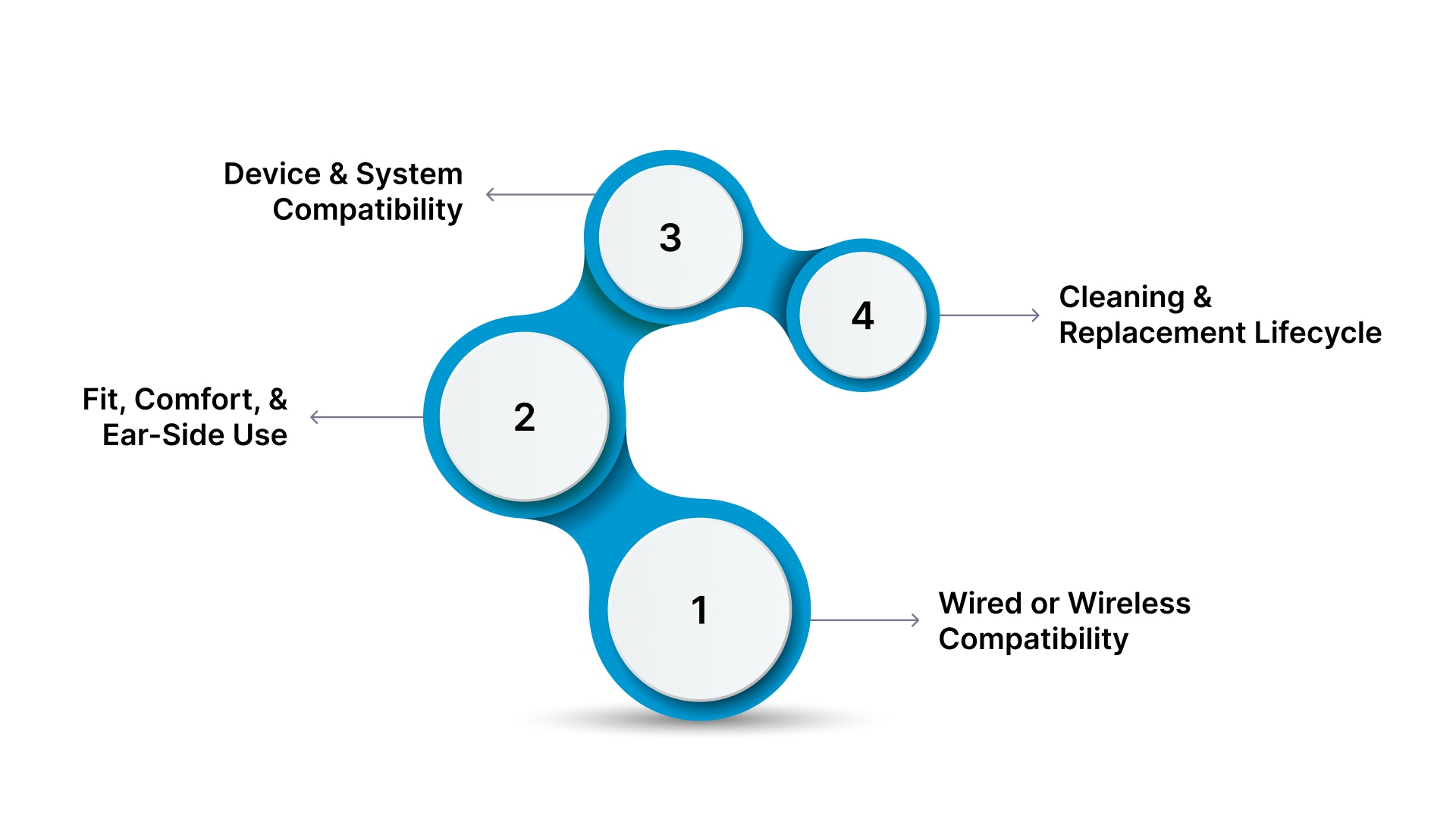
Not all single stereo earbuds are interchangeable. Before selecting one, it is important to consider how and where it will be used to ensure reliable performance and long-term comfort.
Wired or Wireless Compatibility
The listening environment often determines which connection type is appropriate.
Wired options are commonly preferred in clinical and professional settings for reliability
Wireless options may introduce pairing, charging, or interference concerns
Some institutional equipment only supports wired audio connections
Understanding device compatibility upfront helps avoid workflow disruptions.
Fit, Comfort, and Ear-Side Use
Because single stereo earbuds are worn for extended periods, fit matters.
Designs may be optimized for left ear, right ear, or either ear use
Proper fit helps prevent pressure points and fatigue
Secure placement is important in active or long-shift environments
Device and System Compatibility
Professional audio sources vary widely.
Medical and diagnostic equipment may have specific output requirements
Communication systems can differ from consumer devices
Ensuring correct signal handling prevents volume or clarity issues
Cleaning and Replacement Lifecycle
Maintenance expectations should match the environment.
Frequency of cleaning between users
Availability of replacement components
Alignment with hygiene protocols and internal policies
Considering these factors ahead of time helps ensure that a single stereo earbud supports daily use rather than creating new challenges.
Need help choosing the right single stereo earbud for your environment?
Scan Sound works with healthcare, aviation, and accessibility-focused users to match one-ear listening solutions to real-world equipment and workflows.
Why Scan Sound for Single Stereo Listening Applications
Single stereo listening often exposes limitations in standard audio setups. Missing audio channels, inconsistent signal delivery, comfort issues during long wear, and hygiene concerns tend to appear quickly once one-ear listening becomes a regular requirement rather than an occasional choice.
Scan Sound addresses these challenges through product categories designed specifically around one-ear, professional, and shared-use listening needs:
1-BUD Single-Ear Headphones: Built to deliver complete stereo audio through one ear, supporting users who rely on one-ear listening for situational awareness, accessibility, or professional workflows.
Stereo-to-Mono and Single Stereo Adapters: Designed to combine left and right channels into a single balanced signal, ensuring no dialogue, alerts, or instructions are lost when listening through one ear or using institutional equipment.
Audio Cables and Connection Accessories: Support consistent signal transfer and compatibility across medical, diagnostic, communication, and professional audio systems where stable connections matter.
Ear Cushions and Comfort Accessories: Replacement cushions improve fit, reduce pressure during extended use, and help maintain consistent audio performance over time.
Disposable Headphone Covers: Hygiene-focused accessories that support shared-use, clinical, and institutional environments without interfering with sound clarity or comfort.
Microphone Windscreens and Audio Hygiene Accessories: Help reduce unwanted noise and support clearer communication in voice-based applications.
Rather than adapting consumer audio products for specialized use, Scan Sound’s product range is structured around the real conditions in which single stereo listening is used. This problem-focused approach helps ensure one-ear audio remains clear, comfortable, hygienic, and reliable across professional, accessibility-focused, and shared environments.
Conclusion
Single stereo earbuds are designed for listening situations where two-ear audio creates limitations rather than benefits. By delivering complete sound through one ear, they help maintain clarity, reduce listening effort, and support awareness in professional, clinical, and accessibility-focused environments.
Understanding when and why single stereo listening is the right approach makes it easier to choose solutions that work reliably in real-world conditions. When one-ear audio is treated as a functional requirement instead of a workaround, listening becomes more consistent, comfortable, and effective over time.
To explore single stereo listening solutions designed for professional and accessibility-focused use, learn more from Scan Sound.
FAQs
Q: Do single stereo earbuds play both left and right audio in one ear?
A: Yes. True single stereo earbuds intentionally combine the left and right channels into one balanced signal. This ensures dialogue, alerts, and audio cues are not lost when listening with one ear. This capability is central to single stereo earbud benefits in clinical, monitoring, and safety-focused environments.
Q: Are single stereo earbuds helpful for people with single-sided hearing loss (SSD)?
A: They can be a strong fit. Single stereo earbuds route all stereo content to the hearing ear, so you do not need to guess which channel contains important audio. This often reduces listening effort compared to using standard stereo earbuds with one side removed.
Q: Are single stereo earbuds safer than wearing two earbuds at work?
A: In many roles, yes. One-ear listening helps maintain situational awareness, allowing users to hear alarms, announcements, and nearby communication. This is especially relevant in healthcare, aviation, labs, dispatch, and security environments. Always confirm your workplace safety policy, as some settings mandate specific headset configurations.
Q: Will a single stereo earbud work with my device or professional equipment?
A: Compatibility depends on your audio source and workflow. Consumer devices may use 3.5 mm, USB, or wireless connections. Clinical and institutional equipment often requires wired stability and, in some cases, stereo-to-single-ear signal handling. Always verify connector type and signal requirements before selecting an earbud.
Q: How do you manage hygiene for shared-use one-ear audio?
A: Shared-use environments typically rely on disposable covers, routine wipe-down protocols, and replaceable cushions. Single-ear designs are often easier to manage because there are fewer contact points than dual-ear headsets. Hygiene practices should match how frequently the equipment is shared and your facility’s cleaning policies.